
How to Mix and Match Capsule Wardrobe Pieces
Elevate your style with ease! Learn how to mix and match capsule wardrobe essentials for timeless, chic outfits. Maximize versatility today!
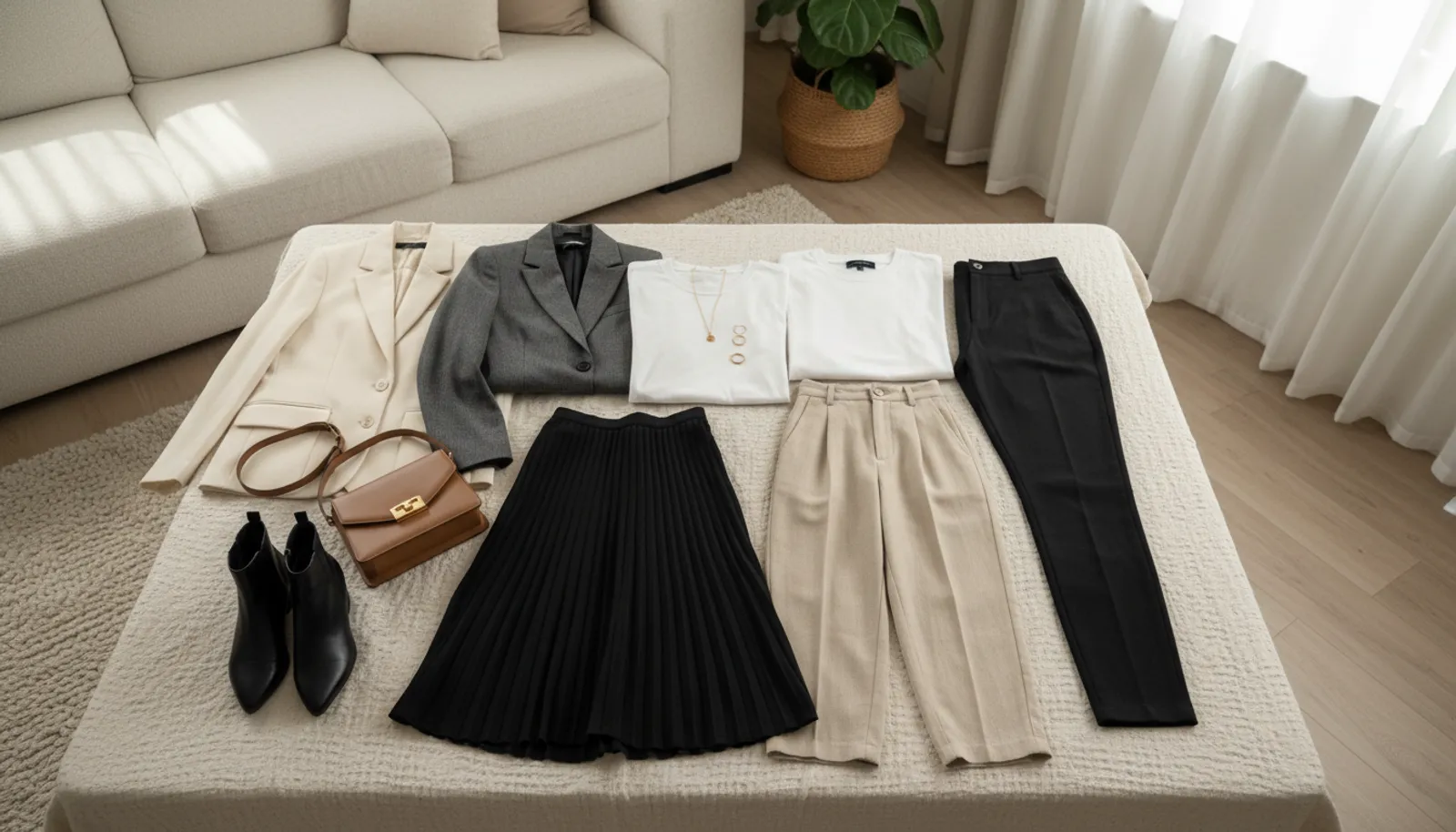

33 min read
Surprising but true: most people wear roughly 20% of their closet 80% of the time, so learning how to mix and match saves both money and morning stress.
This guide shows simple, friendly style tips for minimalism and practical steps for building capsule wardrobe outfits you’ll actually wear. Think quality tees from Quince, ponte knits, a tailored blazer from Aritzia, classic white sneakers from Celine or Isabel Marant, and a dependable black blazer or leather jacket to anchor looks.
We’ll explain how to mix and match wardrobe pieces—start with a neutral palette, add one or two accents, and use layers and proportions to turn casual pieces into office-ready outfits. You’ll see examples of swapping jeans for trousers, or a denim jacket for a blazer, and learn why investing in durable basics pays off.
Along the way, I’ll reference trusted brands and practical capsule rules, and offer a link to a useful how-to on combining casual and work capsules for crossover dressing so you can explore more real-world examples and outfit templates here.
Key Takeaways
- Focus on fewer, high-quality capsule wardrobe pieces you’ll reach for often.
- Use a mostly neutral palette and one Style Twist to keep mashups easy.
- Layering and proportion let you expand capsule wardrobe outfits without extra items.
- Shoes and bags shift a look from casual to polished—choose them deliberately.
- Start with pieces you already wear and treat your first capsule as a draft.
What a Capsule Wardrobe Is and Why It Works
A capsule wardrobe is a curated set of essentials that forms a personal-style foundation. The capsule wardrobe definition centers on a small collection of thoughtfully chosen, easy-to-mix pieces that cover daily needs. Susie Faux coined the phrase in the 1970s and Donna Karan later made the idea mainstream with the “Seven Easy Pieces” approach.
Definition and history of the capsule wardrobe
The practical definition focuses on function. Think timeless tees, tanks, sweaters, denim, blazers, coats, shoes, bags, and a few pieces of jewelry you reach for repeatedly. Starting with items you already wear makes the process simple. A moving-and-packing anecdote often used by stylists shows how fewer, reliable pieces remove friction during life changes.
For deeper how-to guides and printable checklists, visit a clear primer like how to build a capsule wardrobe that lays out step-by-step choices and category lists.
Core benefits: less decision fatigue, time savings, sustainability, and cost savings
One big benefit is reduced decision fatigue. Fewer decisions in the morning create calm and speed. Time savings come from less shopping, fewer returns, and quicker outfit choices.
Intentional buying leads to cost savings over time. Choosing higher-quality basics means pieces last longer and get more wear. Buying less helps the planet by cutting waste and lowering fast-fashion turnover, making sustainability a direct effect of the system.
Why high-quality basics get more wear (20% of clothes worn 80% of the time)
The 80/20 observation is real in many closets. A small set of favorites becomes the backbone of capsule wardrobe outfits. When you pick durable, well-fitting garments, they earn repeat wear and justify investment in quality brands like Everlane, Uniqlo, or Madewell.
Practical mechanics explain why this works: fewer choices mean more frequent use for the pieces you keep. That repeated wear reveals what truly fits your life and style. Simple documentation—saving outfit photos, using checklists, and rotating seasonally—keeps the system practical and evolving.
| Core MVP Items | Why They Matter |
|---|---|
| Basic tees and tanks | Layer easily, great for tucks and casual looks |
| Sweaters and lightweight knits | Multiply outfit options through layering |
| Denim and tailored trousers | Anchor casual and polished looks |
| Blazer and coat | Add structure and finish outfits |
| Shoes and bags | Change the mood of capsule wardrobe outfits quickly |
| Simple jewelry | Elevates basics without clutter |
Start by building around neutral staples like black, white, navy, camel, and gray. These reliable silhouettes make capsule wardrobe outfits simple to assemble. Invest in quality tees, tanks, and crewnecks that keep their shape, then add one striped crew or a color sweater to lift a look without breaking cohesion.
Start with neutrals and a limited palette for easy pairings
Choose a limited palette of three to five core hues. A mostly neutral base plus one accent color keeps daily choices easy and stylish. When you limit tones, every top can meet every bottom and shoes work across multiple outfits.
Use proportions and the rule of thirds to balance looks
Think about silhouette balance. Pair wide-leg trousers with a slimmer top, or tuck a fitted tee into a midi skirt to create clear lines. Apply the rule of thirds wardrobe idea: divide your outfit into three visual zones—top, middle, bottom—to create pleasing proportions.
Layering strategies that expand outfit options without extra pieces
Layer to multiply combinations. Wear a tee under a button-down, add a cardigan as a lightweight top, or throw a blazer over a dress for polish. Tuck, half-tuck, or belt to change shape and make one dress feel like a skirt.
Use a “start with one piece” exercise to spark combinations: pick a blazer and build five outfits around it. Save photos on your phone of the best mixes so you can recreate capsule wardrobe outfits quickly on busy mornings.
Choosing a Functional Neutral Color Palette
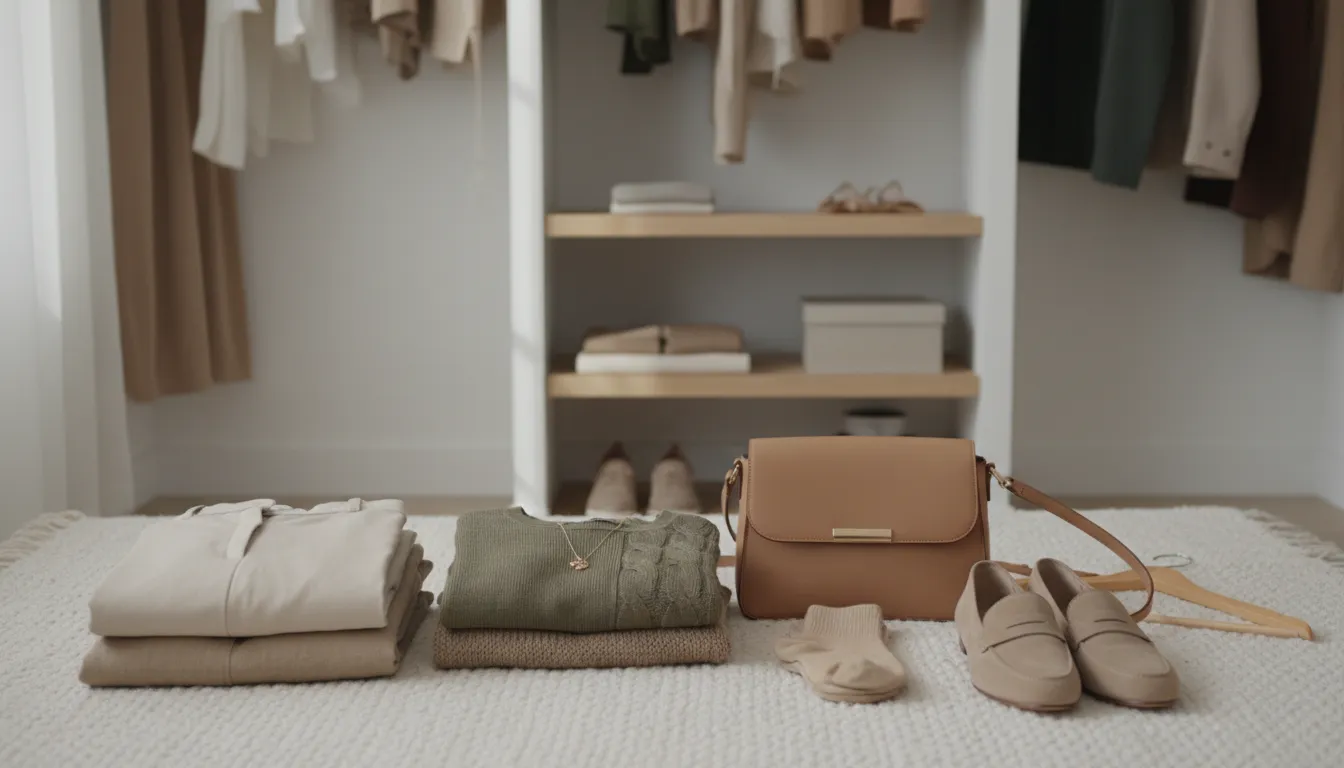
Start with a compact neutral color palette that makes daily dressing simple and reliable. Pick core shades such as black, white, navy, camel, and gray to build a base you trust. These tones pair easily and form the backbone of capsule wardrobe outfits that cover casual, work, and dress-up needs.
Recommended neutral colors and pairings
Black jeans and a white tee create a clean starting point. Add a navy blazer or camel coat for contrast. Gray crewnecks work with denim and tailored trousers alike. A black maxi dress or silk slip becomes a versatile neutral anchor for nights and events.
Adding one or two accent colors
Limit accent colors to one or two favorites you already wear, such as olive or burgundy. Use small doses — a scarf, belt, or handbag — so the neutral base remains cohesive. This method shows how to mix and match without breaking the calm, tonal feel of your closet.
Practical outfit examples you can copy
For weekends, try blue jeans + white tee + denim jacket + white sneakers. For work, choose black trousers + white button-down + blazer + loafers. For a polished weekend, layer a camel coat over a navy knit + black jeans + ankle boots. These capsule wardrobe outfits meet most needs with few pieces.
Keep a simple checklist or phone photos of favorite looks. Recording go-to combinations saves time and reinforces which neutrals pair best, making it easier to see how to mix and match as seasons and moods shift.
Selecting Versatile Tops That Mix and Match Easily
Pick versatile tops that become the backbone of capsule wardrobe outfits. Start with reliable basics in white, black, and a few neutrals from brands like Quince, Skims, and J.Crew. Quality fabrics keep shape and save you from constant replacement, so favor cotton, washable silk, and linen blends for durability and easy layering.
Everyday tees and tanks: fabrics and fits to prioritize
Invest in 5–7 everyday tees and tanks in crew and V-necks to cover casual and polished looks. Look for midweight cotton or silk-blend tees that hold color and resist stretching. Slim and relaxed fits both belong in a capsule; slim tees tuck cleanly into high-waisted trousers, while relaxed tanks layer neatly under blazers.
Button-down shirts and blouses that transition from casual to polished
Include 3–5 button-downs or blouses that can go from errands to meetings. Brands such as Frank & Eileen and J.Crew offer classic cuts that work oversized or tailored. Wear a crisp button-down tucked for polish, or leave it open over a tank for an off-duty look that still reads put-together.
Styling tips: tucks, half-tucks, and layering for variety
Use simple moves to expand looks without buying more. A full tuck lengthens the leg line with tailored trousers. A half-tuck suits relaxed jeans and gives casual polish. Layer a tee under a blazer or a lightweight sweater to shift texture and silhouette across seasons.
Photograph your favorite top-plus-bottom combos for quick morning choices and to learn how to mix and match pieces you already own. For deeper mix-and-match guidance, visit maximizing your wardrobe potential.
| Category | Piece Count | Fabrics | Best Uses |
|---|---|---|---|
| Everyday Tees & Tanks | 5–7 | Cotton, cotton-silk blend | Layering, casual looks, tucks |
| Button-Downs & Blouses | 3–5 | Poplin, washable silk, linen blends | Office, layered off-duty, polished outfits |
| Transitional Layers | 2–4 | Lightweight knit, jersey | Under blazers, over tanks, added texture |
| Accent Tops | 1–3 | Textured knit, subtle prints | Statement within neutral capsule wardrobe outfits |
Start by treating bottoms as the foundation of your daily looks. The right trousers, jeans, or skirts set the tone and make it simple to see how to mix and match pieces into capsule wardrobe outfits.
Blue jeans, black jeans, and tailored trousers
Keep two reliable denim pairs: a favorite-fit pair of blue jeans and a sleeker pair of black jeans for dressier days. Brands like Agolde, Pistola, and Reformation show how different cuts shift mood. Add one pair of tailored trousers for polish. These three anchors—casual denim, dark denim, tailored pants—cover most needs and make assembling outfits fast.
Skirts, shorts, and wide-leg options for seasonality
Include a midi skirt, denim shorts, and a wide-leg pant for variety across seasons. A silk or printed midi can dress up a tee, while shorts keep summer capsule wardrobe outfits relaxed. Wide-leg trousers pair well with slim tops to balance volume and create fresh silhouettes.
How proportions of bottoms affect shoe and top choices
Proportion shapes every decision. Wide-leg trousers work best with fitted or tucked tops and streamlined shoes to avoid overwhelming the frame. Cropped hems pair well with ankle boots or sneakers to lengthen the leg. When you understand proportions, you know which shoes and tops to reach for without trial and error.
Use a simple framework: choose three bottoms you love—two neutrals that fit ten out of ten and one personality piece. Rotate three tops across those bottoms to create nine core looks. Add two layer options and a versatile sneaker to expand combinations to many more outfits. For a practical how-to, see an example plan at mix and match outfits.
| Bottom Type | Role | Best Top Pairings | Ideal Shoes |
|---|---|---|---|
| Blue jeans (favorite fit) | Everyday casual anchor | Tees, button-downs, cropped sweaters | White sneakers, loafers, sandals |
| Black jeans (sleek cut) | Polished casual and evening | Blazers, silk tops, mock necks | Ankle boots, heeled sandals, flats |
| Tailored trousers | Work and refined looks | Fitted knits, blouses, tucked tees | Loafers, pumps, streamlined boots |
| Wide-leg trousers | Statement and comfort | Tucked tops, slim layers, crop sweaters | Platform sandals, sleek sneakers, mules |
| Midi skirt (silk or print) | Versatile dress-up or down | Simple tees, fitted knit, denim jacket | Heeled sandals, sneakers, ankle boots |
| Denim shorts | Warm-weather casual | Loose tees, tanks, lightweight shirts | Slides, sneakers, espadrilles |
Smart layering strategies turn a handful of garments into dozens of looks. Start with versatile pieces that work across seasons and then mix textures and proportions for fresh combinations. Save photos of layered outfits to speed morning decisions and build confidence in how to mix and match on the fly.
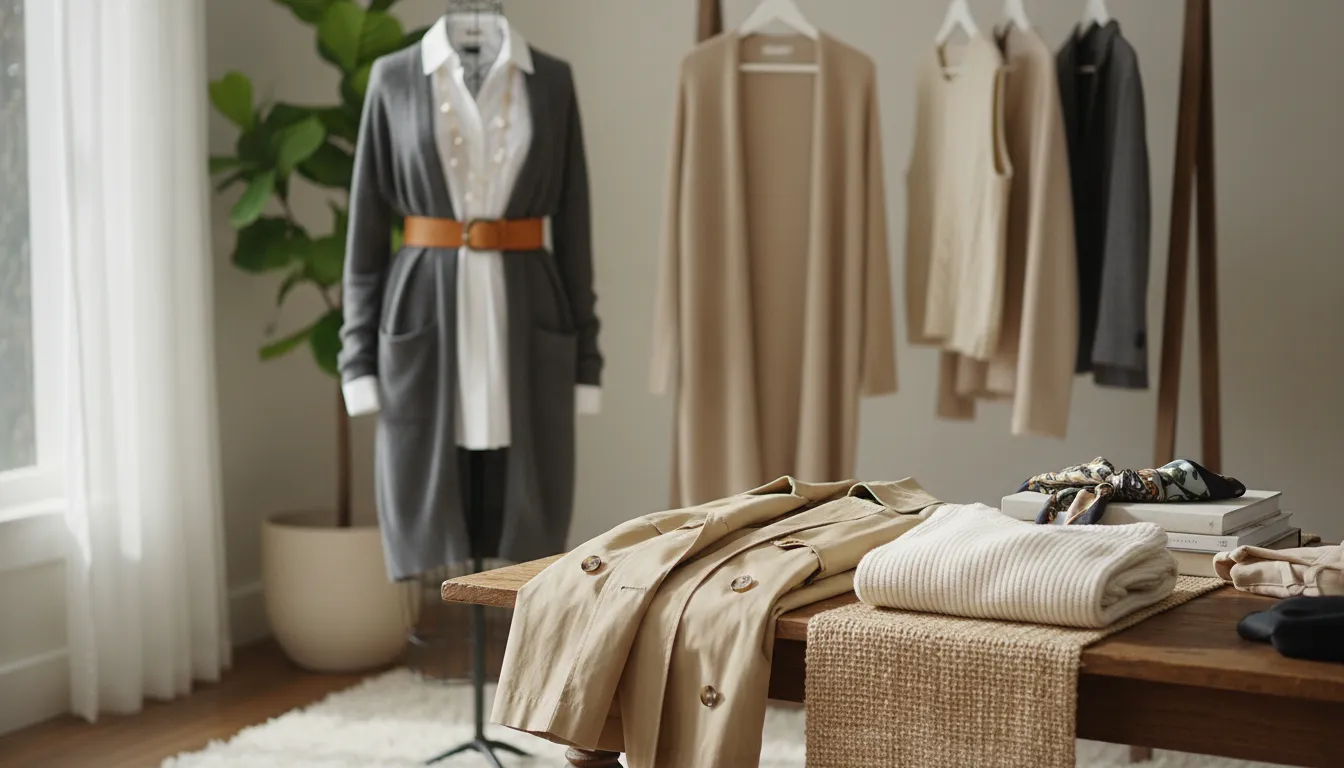
Cardigans, crewneck sweaters, and lightweight knits are core building blocks. A cotton crewneck from J.Crew or a cashmere sweater from Sézane can be worn over tees, layered under a coat, or draped over shoulders as a scarf. Use 3–5 knits to cover casual and slightly dressy moments without crowding the closet.
Blazers and denim jackets supply structure and polish. A tailored blazer from Aritzia or A.L.C. instantly elevates jeans and a tee, while a Reformation or Frame denim jacket makes the same base feel casual and modern. Keep 3–5 jackets and outer pieces to swap for mood shifts: blazer for meetings, denim for weekends.
Long coats and trenches complete seasonal outfits and add instant cohesion. A trench from Mango or a long coat from The Frankie Shop finishes a dress or layered sweater look and protects proportions. These pieces act as the final touch that makes capsule wardrobe outfits feel intentional and put-together.
Try these simple techniques to expand options:
- Wear a sweater over a midi dress to convert it into a skirt and top combo.
- Throw a blazer over jeans and a tee to elevate a casual base.
- Layer a cardigan under a coat for warmth and added texture.
- Belt a blazer to create waist definition and a new silhouette.
| Layer Type | Example Brands | Key Use |
|---|---|---|
| Lightweight Knits | J.Crew, Sézane, Jenni Kayne | Bridge seasons, wear over tees or under coats |
| Structured Jackets | Aritzia, A.L.C., TWP | Polish casual outfits, suitable for work |
| Denim Jackets | Reformation, Frame, Khaite | Casual structure, pairs with dresses or trousers |
| Long Coats & Trench | Mango, The Frankie Shop, Nili Lotan | Seasonal finish, elevates capsule wardrobe outfits |
Shoes complete an outfit and change its mood in seconds. A thoughtful selection of capsule wardrobe shoes lets you create many capsule wardrobe outfits without buying more clothes. Aim for comfort and neutral tones so each pair earns frequent rotation.
White sneakers and why they’re a capsule essential
White sneakers slip under jeans, pair with skirts, and ground dresses for casual polish. Brands like Celine, Isabel Marant, and Dolce Vita show how a clean sneaker can look elevated. Keep one good pair in leather or high-quality canvas for longevity.
Loafers, ballet flats, and strappy heels for different moods
Loafers and ballet flats from Margaux or Loro Piana give a tidy, office-ready look when you want to avoid heels. A pair of strappy heels or kitten heels from Stuart Weitzman or Gianvito Rossi answers dressier plans. Swap flats for heels to see how quickly a daytime look becomes evening-ready.
Boots and how heel and height choices change outfit vibes
Chelsea, mid-calf, and tall boots alter proportions and tone. A flat Chelsea boot reads relaxed and practical. A mid-calf with a block heel adds structure. Brands like Toteme, Loewe, and Khaite offer silhouettes that shift casual basics into polished looks.
Practical checklist: choose four to five pairs that match your life. Start with neutral white sneakers, ankle boots, flats or low heels, sandals, and one statement shoe. This mix covers errands, work, dates, and travel without clutter.
Keep a phone album of outfit photos to test how each shoe works with tops and bottoms. Recording combinations helps you learn how to mix and match swiftly and builds a go-to library of winning fashion combinations ideas.
Key Dresses and One-Piece Staples for Effortless Styling
Pick a few versatile key dresses and you can cut morning decisions in half. A simple black maxi dress and a silk dress act like wardrobe workhorses. They move from coffee runs with white sneakers to dinner with heels.
Black maxi dress options from brands like Enza Costa, Éterne, and THE ROW work as year-round anchors. Wear one with a denim jacket and sneakers for errands or with loafers and a blazer for meetings. The long silhouette keeps lines clean while letting accessories change the mood fast.
Silk dress picks from Quince, Jenni Kayne, and L’AGENCE layer beautifully under sweaters or over turtlenecks. A silk dress can look polished at an event and relaxed on Saturday. Treat it like fabric that shifts role based on shoes and outerwear.
Midi and wrap dresses broaden capsule wardrobe outfits without adding clutter. A wrap dress pairs with cardigans and boots in fall. A midi slides under a blazer for work or pairs with sandals in summer. Choose simple silhouettes that translate across seasons and occasions.
Convert one-piece dresses into skirt looks to expand outfit options. Pull a cropped knit or tee over a slip dress to create a skirt-and-top combo. Belt a dress at the waist to alter proportions and pair it with a chunky sweater for a layered feel.
Limit your dress count to two or three if you wear them often. Use phone photos of favorite conversions to speed dressing. That way you keep capsule wardrobe outfits fresh while learning how to mix and match pieces without extra shopping.
Outerwear That Elevates Simple Combinations
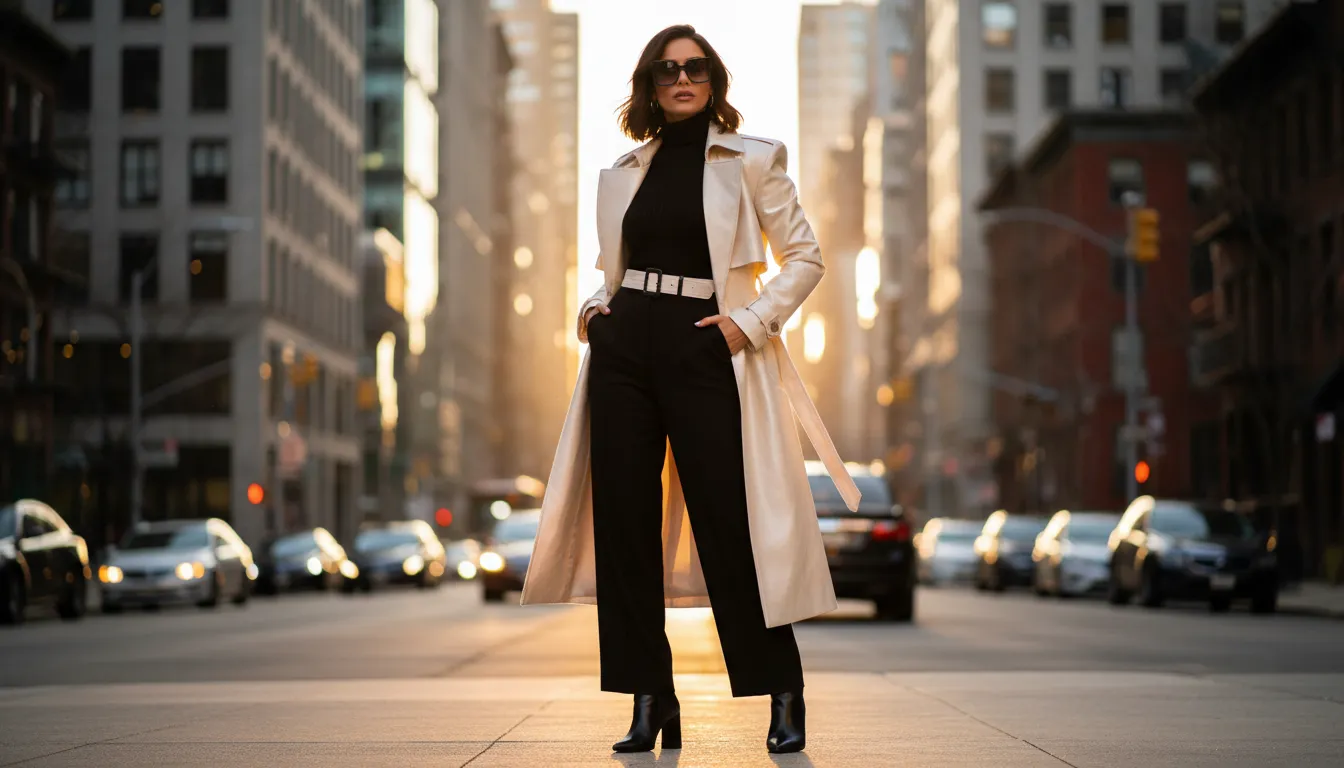
Outerwear can turn a basic outfit into a memorable one. Pick three to five pieces that work for your climate and lifestyle. Focus on items that layer easily over sweaters and blazers so you get more looks with fewer garments.
Leather jacket for instant edge
A leather jacket adds attitude to soft dresses and refined trousers. Try a classic biker from Mango or a structured piece from ME+EM over a silk dress to balance femininity with grit. Good leather improves with wear, so an investment in quality pays off.
Denim jacket for casual-versatility
A denim jacket is an all-season hero. Brands like Reformation and Frame make lightweight and cropped options that layer well with midi skirts and tees. Pair a denim jacket with sneakers and a midi skirt for casual-cool, or throw it over a blazer to lower formality without losing polish.
Long coat and tailored outerwear for polish
A neutral long coat provides instant refinement. A wool long coat from Nili Lotan or a tailored option from The Frankie Shop completes tailored trousers and blazers. Choose a camel or navy hue so it pairs with most capsule pieces and acts as a power piece on brisk days.
| Outerwear | Best for | How to wear | Recommended brands |
|---|---|---|---|
| Leather jacket | Adding edge to dresses and trousers | Over a silk dress or with jeans and boots for contrast | Mango, Nour Hammour, ME+EM |
| Denim jacket | Casual layering across seasons | With a midi skirt and sneakers or layered over a light sweater | Reformation, Frame, Khaite |
| Long coat | Polished silhouettes and cooler weather | Finish tailored trousers and blazers; choose neutral tones | Mango, The Frankie Shop, Nili Lotan |
Accessory Choices That Change Outfit Perception
Small accessories can remake the same outfit for different days. Thoughtful accessory choices add function, polish, and personality without increasing closet size. Aim for four to six reliable pieces that cover work, errands, and evenings.
Belts redefine shape and silhouette. A slim leather belt cinches a blazer at the waist and turns it into a top. A wider statement belt shortens a long dress and balances proportions. Consider pieces from B-Low The Belt or Khaite when you want lasting design and fit.
Bags set the outfit’s purpose. Choose a chic black tote from Cuyana or LOEWE for work. Pick a compact crossbody that doubles as a clutch for quick errands and travel. Keep a small clutch on hand for nights out to shift an outfit instantly.
Jewelry changes mood with tiny swaps. Delicate chains keep things quiet. A chunky gold necklace or bold hoops raise formality in seconds. Brands such as Adina Reyter offer fine pieces that feel minimal yet elevated.
Use stored outfit photos and a checklist to track which belts, bags, and jewelry match each core look. This practice makes how to mix and match faster. It keeps morning choices simple and consistent.
Below is a practical comparison to help you choose a compact kit of accessories that works with most capsule wardrobes.
| Accessory | Function | When to Wear | Example Brand |
|---|---|---|---|
| Slim leather belt | Defines waist, refines blazers and dresses | Office looks, tailored outfits | Khaite |
| Wide statement belt | Alters proportions, adds visual interest | Casual dresses, oversized coats | B-Low The Belt |
| Black tote | Holds essentials, anchors professional outfits | Workdays, travel | Cuyana |
| Convertible crossbody | Hands-free option that can become evening clutch | Errands, weekend outings, dinners | LOEWE |
| Small clutch | Streamlines evening looks, limits bulk | Nights out, formal events | The Row |
| Delicate chain | Subtle shine, day-to-day wear | Casual and office looks | Adina Reyter |
| Chunky gold necklace or hoops | Elevates basics, shifts formality up | Dressier looks, statement moments | Adina Reyter |
Building a Capsule Wardrobe Checklist for Your Lifestyle
Start small and practical. A capsule wardrobe checklist helps you focus on high-rotation pieces you already wear. Use a simple closet audit to pull favorite items, note gaps, and avoid redundant buys.
Follow a three-step process: pull the pieces you love, sort remaining items by category, and gently declutter. That closet audit reveals which basics carry your daily looks and which items drain space. Treat your first draft as a working list you can refine each season.
Use the category-based checklist below while shopping or editing at home. Keep the counts flexible to match your routine and climate. Bring a printable checklist to the store so you buy to fill real needs, not trends.
How to mix and match: focus on neutral anchors, one or two accents, and pieces that layer well. This approach increases the number of capsule wardrobe outfits you can make from fewer items.
- Bottoms: 5–7 (jeans, tailored trousers, skirt)
- Tees & tanks: 5–7 (cotton tees, rib tanks)
- Tops/blouses: 3–5 (button-down, silk blouse)
- Sweaters: 3–5 (crewneck, cardigan)
- Dresses: 2–3 (wrap, black dress)
- Jackets & coats: 3–5 (denim jacket, blazer, trench)
- Shoes: 4–5 (white sneakers, loafers, boots, heels)
- Accessories: 4–6 (bag, belt, simple jewelry)
Below is a compact table you can use as a printable checklist or adapt into a PDF. Mark items you own, note preferred brands for fit and durability, and list one shopping priority per row.
| Category | Ideal Count | Own | Priority |
|---|---|---|---|
| Bottoms | 5–7 | Jean, black trouser, skirt, culottes, shorts | Tailored trousers to finish looks |
| Tees & Tanks | 5–7 | White tee, black tee, striped tee, tanks | Quality cotton tee in true fit |
| Tops / Blouses | 3–5 | Button-down, silk blouse, casual top | Neutral blouse for office to evening |
| Sweaters | 3–5 | Crewneck, cardigan, lightweight knit | Neutral cardigan for layering |
| Dresses | 2–3 | Little black dress, wrap dress | Day-to-night versatile dress |
| Jackets & Outerwear | 3–5 | Denim jacket, blazer, trench | Well-fitting blazer for polish |
| Shoes | 4–5 | White sneakers, loafers, ankle boots, heels | Comfortable loafers for errands |
| Accessories | 4–6 | Tote, crossbody, belt, simple necklace | Structured tote for daily use |
Editing and Decluttering Tactfully
Start small and kind. A gentle decluttering wardrobe session focuses on visibility and wearability so the process feels doable, not punitive. Move off-season items out of sight to reduce visual clutter and set a timer for short, focused rounds.
Use a sort-by-category method: take out jeans, pants, skirts, shorts, tees, tops, sweaters, dresses, coats, bags and shoes. Lay each category flat or hang for quick comparison. Pull favorites first, then handle the rest in two- to five-minute batches to avoid decision fatigue.
Quick prompts to decide
Ask three simple questions: Does it fit well? Is it comfortable? Do I wear it often? Items that fail two or more prompts move to the next pile.
Gentle rules to guide choices
Keep pieces that hold shape and show quality, especially those that form strong capsule wardrobe outfits. Let go of items that pinch, gap, or sit unused for months. This approach supports intentional shopping and makes it easier to learn how to mix and match the pieces you love.
What to do with removed items
Sort removals into donate, sell, or recycle. High-quality or designer pieces often do well on resale platforms and can fund thoughtful replacements. Textiles beyond repair should go to local recycling programs.
Track progress with a short checklist on your phone or a printable list. Note gaps you find during the closet edit and plan one intentional purchase at a time. For more tips on decluttering and building a minimal set of interchangeable pieces, see this guide on building a capsule with less waste that explains practical steps.
After a closet edit, photograph outfit combinations to remember pairings. Saving a few go-to looks turns your tidy closet into a toolbox for easy mornings and shows how to mix and match without adding more items.
Creating Ready-to-Wear Outfit Combinations
Start with a short list of reliable pieces and plan looks that move from day to night. Pick three anchors—a pair of black jeans, a tailored blazer, and a versatile maxi dress. Test each anchor with tees, knitwear, and shoes to map practical ready-to-wear outfits for work, errands, and evening plans.
How to mix and match begins with one piece. Choose a favorite item, such as a camel blazer or white tee, then pair it with every compatible bottom and accessory. Note how proportions change the mood: cropped tops with high-waist trousers create a cleaner silhouette, while oversized sweaters soften tailored trousers.
Create 7–10 everyday outfits by rotating a small set of tops, bottoms, and shoes. Build a list that includes casual, smart-casual, and dressy options. Example moves: black jeans + tee + blazer for a polished casual look; maxi dress + white sneakers by day and heels at night for easy transitions.
Save outfit photos on your phone in a dedicated folder. Photograph complete looks under good light and add short notes about where you wore them. Offline access matters, so store images directly on your device rather than relying solely on web apps.
Use a simple checklist to test which capsule wardrobe outfits work best. Track comfort, fit, and how often you reach for each combo. Over time, you will refine which fashion combinations ideas deliver the most mileage for your lifestyle and reduce decision fatigue.
Seasonal Rotation and Maintaining Versatility
Start by building a seasonal capsule wardrobe around the weather you live in now. Keep heavy coats, boots, and chunky knits accessible for cold months. Store sandals, linen tops, and lightweight dresses out of sight until warm weather returns.
Plan to rotate capsule pieces every few months so outfits stay fresh and practical. Label bins or use a simple printed checklist to track what you move. Save photos of favorite capsule wardrobe outfits on your phone to speed morning choices and keep continuity between seasons.
Swap pieces in and out as your life and climate change. If a job shift or move requires dressier looks, introduce a tailored blazer or structured bag. If the climate gets wetter, add a waterproof trench and ankle boots. Test changes over several weeks to see which swaps truly work.
Invest in quality replacements when items lose shape, no longer fit, or stop matching your routine. Focus on durable fabrics and classic silhouettes for staples like blazers, leather jackets, and a good pair of jeans. Buying secondhand from reputable resale sites can give access to well-made designer pieces at better value.
Use a small table to compare seasonal key pieces and why they matter for versatility. The list helps you decide which items to rotate and which to keep year-round.
| Season | Key Pieces to Swap In | Pieces to Keep Year-Round | Why This Helps Capsule Wardrobe Outfits |
|---|---|---|---|
| Cold | Long coat, boots, wool sweater | Neutral jeans, white tee, blazer | Layering extends looks and keeps classics usable under heavier outerwear |
| Warm | Sandals, linen shirt, lightweight dress | Tailored trousers, denim jacket, simple knit | Lighter fabrics broaden options while anchors maintain cohesion |
| Transitional | Light trench, ankle boots, thin knit | Button-down, midi skirt, white sneakers | Mixing layers lets you rotate capsule pieces daily for varied looks |
Style Tips for Minimalism and Fashion Combinations Ideas
Start with a clear aim: prioritize garments that fit your life and feel comfortable. Quality over quantity guides smarter shopping and longer-lasting capsule wardrobe outfits. Look to brands like Jenni Kayne for knitwear, The Row for structured bags, and Quince for affordable basics when you want reliable examples to model.
Embrace quality over quantity and timeless silhouettes
Choose classic shapes—a tailored blazer, a straight-leg jean, a simple silk blouse—that work across seasons. These silhouettes keep capsule wardrobe outfits feeling fresh without chasing trends.
Invest in one or two statement basics rather than many low-cost pieces. A well-cut trench or leather jacket alters any look and reduces daily decision fatigue.
Mixing textures and subtle patterns to keep looks interesting
Texture adds depth without clutter. Pair silk with knit, denim with leather, or cotton with a soft wool sweater for contrast. A striped sweater or faint houndstooth keeps cohesion while giving eye-catching detail.
Document successful pairings with photos so you remember favorites and learn how to mix and match similar fabrics next season.
Simple styling tweaks: belts, shoe swaps, and layering to vary outfits
Small changes create big effects. Use a belt to define the waist and change proportions. Swap white sneakers for heels to shift from casual to dressy in seconds.
Layering multiplies options: a blazer over a tee, a cardigan tied at the waist, or a long coat over a wrap dress transforms basics into new fashion combinations ideas.
Treat your capsule as an evolving draft. Test combinations, save the ones you love, and focus on how to mix and match pieces to maximize versatility. These low-effort moves expand outfit variety without adding more items to your closet.
Conclusion
A curated capsule delivers less clutter and more wear from fewer, better pieces. Focus on tees, tanks, crewnecks, denim, blazers, leather goods, smart shoes, and a few accessories. These staples move easily from day to night and across seasons, proving the value of investing in quality and using secondhand markets for designer finds.
Start the process by sorting what you already wear, then build for the current season. Create 7–10 capsule wardrobe outfits from a small set and iterate as your life changes. This method reduces decision fatigue, saves time and money, and supports sustainable choices while teaching you how to mix and match with confidence.
Keep checklists and outfit photos handy—print or save them offline so mornings are faster. Try a short exercise: pull 15–20 favorites, make several looks, snap photos, and use a checklist when shopping or rotating pieces. These simple steps will cement practical style tips for minimalism and give you accessible fashion combinations ideas for everyday wear.
FAQ
What is a capsule wardrobe and where did the idea come from?
A capsule wardrobe is a small, thoughtfully chosen collection of versatile pieces that mix and match easily to support everyday life. The concept traces back to Susie Faux in the 1970s and was popularized by Donna Karan’s “Seven Easy Pieces” in the 1980s. It emphasizes quality basics and a cohesive palette so you spend less time deciding what to wear and more time living.
Why does a capsule wardrobe actually work?
Capsules reduce decision fatigue by limiting choices to reliable combinations. They encourage buying fewer, higher-quality items so those pieces get more wear—the common observation being roughly 20% of clothes receive 80% of use. That focus saves time, reduces returns and impulse buys, lowers environmental impact, and lets you invest in durable staples that pay off over time.
How do I start mixing and matching pieces in a capsule?
Start with a mostly neutral palette and one or two accent colors you already wear. Use proportion rules (like the rule of thirds) to balance silhouettes: pair wide-leg trousers with a slim top, or tuck a fitted tee into high-waisted jeans. Layer tees, tanks, button-downs, cardigans, blazers, and jackets to expand looks without adding garments.
Which neutral colors should form the base of my capsule?
Rely on black, white, navy, camel, gray, cream, and taupe as your foundation. These pair seamlessly together and serve as anchors for outfit building. Add one or two accent colors—olive, rust, dusty pink, or blue—sparingly so they don’t break cohesion.
What tops make the most sense for a capsule wardrobe?
Prioritize durable everyday tees and tanks in cotton or cotton blends (brands like Quince, Perfectwhitetee, Khaite are commonly recommended for fit and longevity), a few button-downs (J.Crew, Frank & Eileen), and lightweight knits. Keep several fitted and relaxed options to vary looks; simple styling tweaks—tucks, half-tucks, layering—multiply outfits.
What bottom pieces anchor the most outfits?
A pair of blue jeans in your preferred cut (Pistola, Agolde), black jeans for a dressier edge (Reformation, SLVRLAKE), and one or two pairs of tailored trousers or wide-leg pants form a strong base. Add a midi skirt or shorts for seasonality. Choose bottoms that flatter your proportions so shoes and tops work predictably.
Which layering pieces give the biggest payoff?
Cardigans, crewneck sweaters (Quince, Reformation, Jenni Kayne), blazers (Aritzia, A.L.C.), denim jackets (Reformation, Frame, Khaite), and a neutral long coat (Mango, The Frankie Shop, Nili Lotan) extend outfit possibilities. They let you convert casual looks into polished ones and adapt single pieces across seasons.
What shoes should be in a capsule to maximize combinations?
Aim for 4–5 reliable pairs: white sneakers (Dolce Vita, Celine), loafers or ballet flats (Margaux, Loro Piana, Chanel), ankle boots or Chelsea boots (TOTEME, KHAITE), sandals or strappy heels for dressier moments (Schutz, Stuart Weitzman), and one statement or seasonal shoe. Neutral tones keep mixing simple and practical.
How many dresses should I include and which styles work best?
If you wear dresses, 2–3 versatile silhouettes are enough. A black maxi or slip dress (Enza Costa, Éterne, THE ROW) and a silk or midi wrap dress (Quince, Jenni Kayne, L’AGENCE) are highly adaptable. Dresses can be layered with sweaters, jackets, or sneakers to create many looks; you can also belt or layer to convert a dress into a skirt-and-top combination.
How should I choose outerwear for a capsule?
Pick pieces that layer well over sweaters and blazers: a leather jacket for edge (Mango, Nour Hammour), a denim jacket for casual versatility (Frame, Reformation), and a neutral long coat for polish. Choose outerwear appropriate to your climate and that complements most outfits in your capsule.
Which accessories deliver the most impact without clutter?
Keep a small set of versatile accessories: a tote or structured bag for work (Cuyana, The Row, LOEWE), a crossbody for errands, a clutch for evenings, a classic belt (B-Low the Belt, Khaite) to define waistlines, and a few simple gold jewelry pieces (Adina Reyter, Shylee Rose). Swapping one accessory can change an outfit’s function instantly.
What’s the easiest way to audit my closet and build a checklist?
Pull 15–20 pieces you actually wear and live in, then sort remaining items by category: bottoms, tops, sweaters, outerwear, shoes, and accessories. Compare your pieces to a category-based checklist (5–7 bottoms, 5–7 tees/tanks, 3–5 sweaters, 2–3 dresses, 3–5 jackets, 4–5 shoes, 4–6 accessories) to spot gaps. Use a printable checklist and bring it when shopping to avoid impulse buys.
How do I declutter gently without getting overwhelmed?
Use a sort-by-category method to create visibility. Remove items that don’t fit, are uncomfortable, or rarely get worn. Start small—donate or sell a few items each session rather than deep purging. Consider reselling high-quality or designer pieces to fund thoughtful replacements.
How can I create 7–10 ready outfits from my capsule?
Try the “start-with-one-piece” exercise: pick a favorite bottom or top and pair it with every compatible item in your capsule to map combinations. Focus on proportions and the rule of thirds. Photograph successful outfits and save them in a phone folder for fast morning reference—this builds your ready-to-wear library.
How should I handle seasonal rotation and investing in quality?
Build the capsule for the current season and move off-season items out of sight. Swap pieces in and out intentionally as weather and lifestyle change. Invest in durable fabrics and classic silhouettes; consider secondhand designer finds for blazers, leather jackets, and structured bags to get longer-lasting value.
What are simple style tips for minimalism that still keep looks interesting?
Embrace quality over quantity, mix textures (silk, knit, denim, leather), and add subtle patterns like a striped crewneck. Use small styling tweaks—belts to change proportions, shoe swaps to shift formality, and layering to refresh silhouettes. These moves expand combinations without adding volume to your closet.
How do I keep my capsule practical for real life?
Prioritize pieces you already wear, choose comfortable and durable fabrics, and set realistic category counts that fit your lifestyle. Save outfit photos and make a printable checklist so your capsule is usable offline. Test the capsule for a few weeks and iterate: treat the first round as a draft that improves with wear.