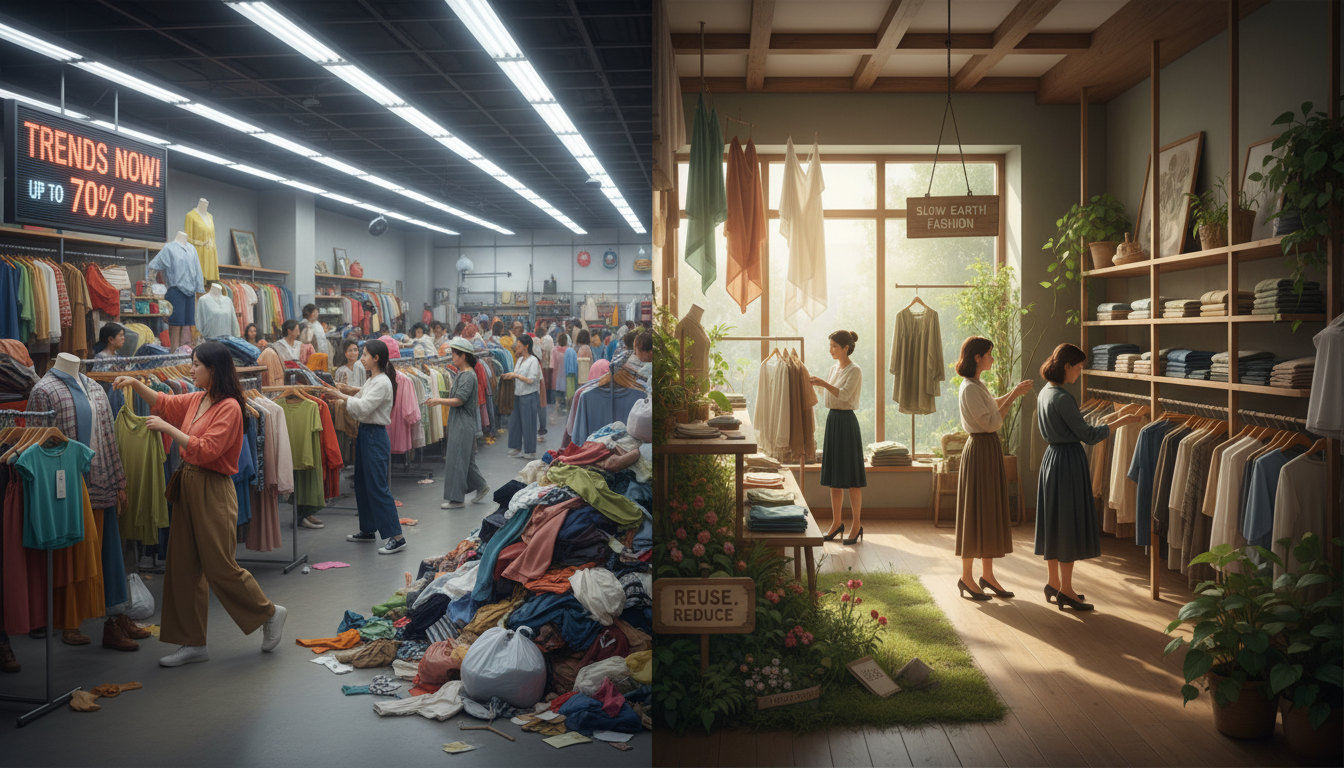

Nearly 60% of garments produced worldwide are worn fewer than five times before being discarded — a stark figure that puts the scale of the fast-fashion problem in plain sight.
This fashion comparison guide lays out how fast fashion vs sustainable approaches differ in purpose, practice, and impact. Fast fashion, as defined by Merriam‑Webster and The Economist, focuses on rapid trend turnover and low prices. Sustainable fashion, described by Janet Hethorn and Connie Ulasewicz and reinforced in recent academic work (Nuñez Martinez et al., 2024), emphasizes ethical labor, reduced environmental harm, and longer product lifecycles.
The market shows both forces at work: major retailers keep quick, low-cost options in high demand, while eco-conscious brands and events like Eco Fashion Weeks signal growing interest in eco-friendly fashion choices. This article will help U.S. readers compare fast fashion and sustainable options, weigh social and environmental trade-offs, and explore practical steps such as minimalist wardrobe options that lower cost and waste.
Key Takeaways
- Fast fashion prioritizes speed and low price; sustainable fashion prioritizes people and the planet.
- High garment turnover drives waste and pollution; durable choices reduce long‑term impact.
- Price and convenience keep fast fashion popular, but transparency and ethics are growing priorities.
- Minimalist wardrobe options and mindful shopping are practical ways to shift toward eco-friendly fashion choices.
- This fashion comparison guide will help you make informed, everyday decisions when comparing fast fashion and sustainable brands.
What is fast fashion: definition, business model, and scale
Fast fashion refers to a business model that turns runway looks and street trends into inexpensive garments at high speed. Designers and buyers at brands like Zara and H&M move from concept to store shelves in weeks. The fast fashion definition centers on mass production, low unit cost, and rapid turnover aimed at meeting consumer demand for new styles.
Retailers compress design cycles, shorten lead times, and outsource manufacturing to countries such as Bangladesh, China, India, and Vietnam. These operational shortcuts make trend-driven items widely available. The approach favors cost savings over long-term quality and often reduces transparency across the supply chain.
Production speed drives a steady flow of collections that keep shoppers returning. Factories run multiple small batches rather than fewer large runs. This reduces inventory risk for brands and increases the perceived affordability and accessibility of clothing for many consumers.
The global scale of fast fashion is enormous. Industry estimates put annual garment output near 100 billion items. The UN Alliance for Sustainable Fashion links the sector to 2–8% of global carbon emissions. High volumes and broad market reach let low prices spread across developed and emerging markets.
This fashion comparison guide helps readers weigh business practices against social and environmental costs. Comparing fast fashion vs sustainable reveals trade-offs between immediate cost and long-term value, with affordability and accessibility on one side and durability and ethics on the other.
Industry definition and how fast fashion works
At its core, the model relies on rapid trend capture. Designers sample looks from runways and social media. Merchandising teams send quick-turn specs to suppliers. Retailers refresh assortments often to keep stores and websites current.
Production speed, supply chain shortcuts, and trend-driven design
Compressed timelines mean quality control can be limited. Brands accept higher defect risk to hit calendar-driven launches. Suppliers prioritize fast, low-cost inputs such as polyester blends to meet price targets. The result is garments designed for short lifespans.
Global scale and economic role: production volumes and market reach
The scale supports huge employment in manufacturing hubs and fuels retail growth worldwide. Low prices expand consumer choice, especially for budget-conscious shoppers. This widespread reach helps explain why the debate over fast fashion vs sustainable is central to modern textile policy and consumer behavior.
| Aspect | Fast Fashion | Sustainable Alternative |
|---|---|---|
| Primary goal | Rapid trend capture and low cost | Durability, low impact, ethical sourcing |
| Typical cycle time | Weeks from design to shelf | Months to years, focus on longevity |
| Common materials | Polyester blends, low-cost cotton | Organic cotton, recycled fibers, Tencel |
| Supply chain traits | Outsourced, low transparency | Traceable, audited, often local or certified |
| Market impact | High volumes, wide affordability and accessibility | Smaller scale, higher upfront price, longer value |
| Environmental footprint | High per-sector emissions and waste | Lower lifecycle impacts when scaled correctly |
Sustainable fashion centers on production that limits harm to people and the planet. Brands like Patagonia and Eileen Fisher emphasize durability, fair wages, and lower environmental footprints. Readers will find this section helpful as part of a broader fashion comparison guide that contrasts fast, cheap trends with mindful alternatives.

Core principles
Sustainable fashion principles require environmental responsibility at every stage. That means sourcing lower-impact fibers, cutting chemical use, and reducing water and energy use in manufacturing. Ethical labor is equally central, with firms expected to pay living wages and maintain safe working conditions.
Lifecycle thinking
Design choices shape a garment’s footprint. Brands that build for longevity focus on sturdy construction, clear care instructions, and repairability. Designing for reuse and recycling reduces waste and resource intensity. Take-back programs and easier recycling paths help close loops and keep textiles out of landfills.
Overlap with other movements
Sustainable fashion overlaps with slow fashion overlap and circular fashion in meaningful ways. Slow fashion overlap stresses fewer, better-made pieces and mindful consumption. Circular approaches add systems for repair, resale, and materials recovery. Ethical fashion brings focus to worker welfare and community impact, as seen in Certified B Corporations and social enterprises.
| Principle | Practical actions | Consumer tip |
|---|---|---|
| Environmental responsibility | Choose low-impact fibers, reduce water and energy, avoid toxic dyes | Prefer brands that publish footprint data and material sourcing |
| Ethical labor | Fair wages, safe factories, community investment | Look for certifications and transparent supply-chain reporting |
| Design for lifecycle | Durable construction, repairability, recyclability | Buy timeless styles and learn simple mending skills |
| Circular systems | Take-back programs, resale, material recycling | Use brand take-backs and shop secondhand to extend garment life |
| Mindful consumption | Smaller wardrobes, quality over quantity, intentional shopping | Create a capsule collection to reduce impulse buys |
Environmental impacts compared: emissions, water, and waste
Fast fashion vs sustainable approaches show stark contrasts in resource use and pollution. The apparel sector drives a large share of greenhouse gases, with studies citing about 10% of global carbon emissions linked to clothing when accounting for production, transport, and disposal. Readers debating carbon footprint fashion need clear data to weigh purchases and brand claims.
Carbon footprint comparisons and sectoral contribution to emissions
The industry emits from fiber production to finishing. Dyeing and finishing alone account for roughly 36% of textile manufacturing emissions, with yarn prep and fiber production adding major shares. Some UN reports place apparel at 2–8% of global CO2 emissions when measured differently, while other analyses point toward a near 10% figure if full supply chains are included.
Fast fashion’s rapid turnover and high volume—about 100 billion garments a year—amplify these impacts. A single brand shift to longer-lived garments can reduce per-item carbon intensity. Consumers choosing eco-friendly fashion choices can help lower demand for throwaway garments and shrink aggregate emissions.
Water use and pollution: dyeing, wastewater, and textile runoff
Textile production is a top industrial water user. Growing and processing cotton, plus dyeing and finishing, drain freshwater supplies. Producing one cotton shirt can need about 700 gallons, while jeans may use around 2,000 gallons.
Dye houses release wastewater rich in chemicals. Textile dyeing ranks as the second-largest polluter of water globally. Persistent compounds such as benzothiazole have been detected in runoff, posing ecological and human health risks. Brands that adopt low-water processes and closed-loop dyeing can cut pollution and ease pressure on rivers and aquifers.
Textile waste statistics and landfill/incineration trends
Waste at end-of-life creates another burden. Nearly 92 million tons of textile waste are discarded yearly according to recent reviews. Roughly 85% of textiles may end up in landfills or incinerators each year, while the average American discards about 80 pounds of clothing annually.
Washing synthetic garments sheds microfibers that enter oceans. Estimates show around 500,000 tons of microfibers reach the sea each year, equal in some comparisons to billions of plastic bottles. Moving toward reused, repaired, or recycled items reduces waste and addresses microplastic release.
| Impact Area | Fast Fashion Typical Figure | Sustainable Practice Target |
|---|---|---|
| Annual garments produced | ~100 billion | Lower volumes; quality over quantity |
| Share of global emissions | 2–10% depending on accounting | Reduced per-item emissions via low-impact fibers |
| Water use per item | Shirt ~700 gal; Jeans ~2,000 gal | Closed-loop dyeing and organic fibers |
| Waste discarded annually | ~92 million tons | Repair, resale, and improved collection systems |
| Microfiber pollution | ~500,000 tons to oceans/yr | Reduced synthetics; filtration and material innovation |
| Water pollution | High from dyeing and finishing | Cleaner chemistry and wastewater treatment |
Social and ethical implications: labor, wages, and safety
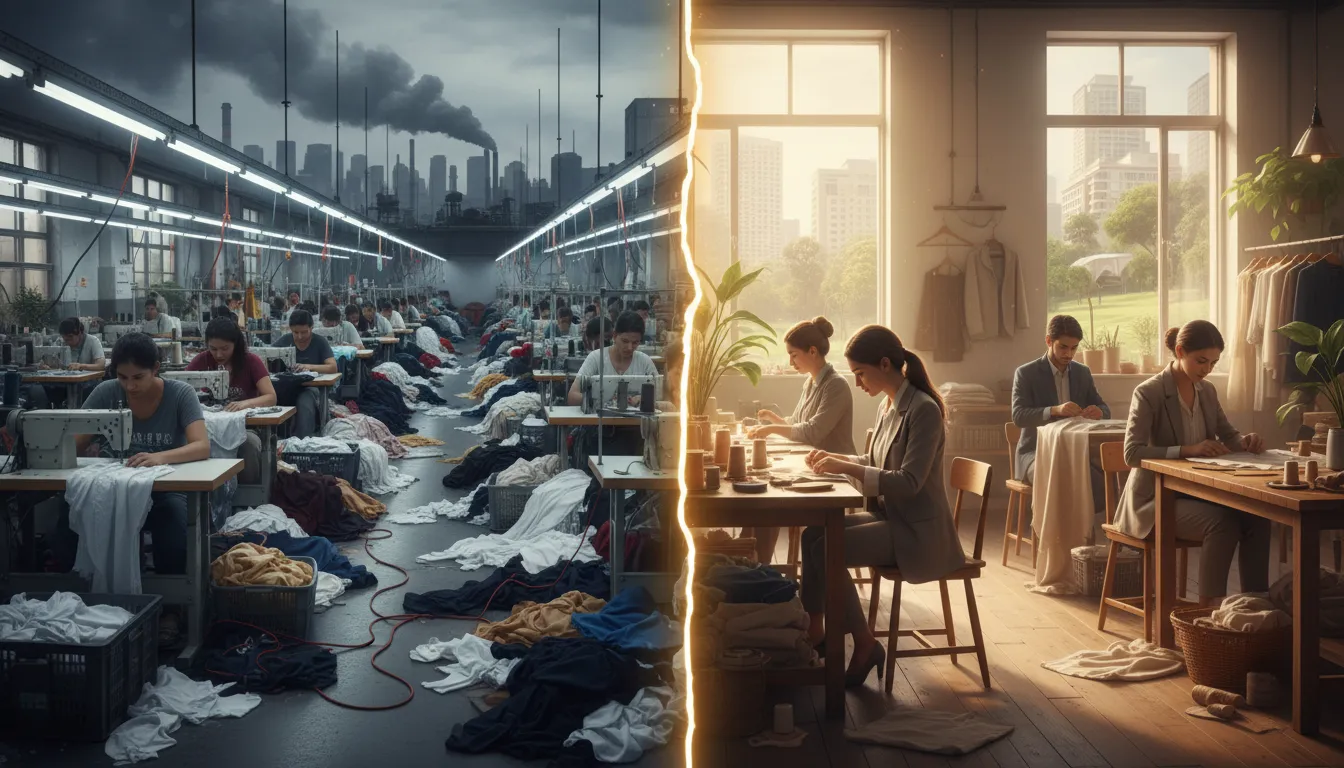
The human cost behind garments shapes the debate on fast fashion vs sustainable choices. Workers in large supply chains often face long hours, low pay, and unsafe conditions, issues documented in numerous audits and academic studies.
Reports estimate tens of millions work in garment factories worldwide, with a tiny share earning a living wage. The Rana Plaza collapse and follow-up inspections revealed systemic safety gaps that left thousands harmed and many more at risk. For background on these failures, read a detailed industry account examining fast-fashion practices.
Working conditions in global supply chains
Many factories supplying major brands operate under intense time pressure. Employees may work up to 16 hours a day to meet trend-driven deadlines. Repetitive tasks, poor ventilation, and chemical exposure raise health risks that persist across regions.
Child labor, living wages, and human-rights risks
Child labor still affects segments of the textile sector, with millions at risk in informal or unregulated settings. Low wages drive families to accept unsafe work, widening the gap between corporate profits and worker wellbeing.
Sustainable brands, certifications, and community impact
Some companies pursue fair labor fashion models through partnerships and certifications. Programs such as WRAP and Fair Trade aim to ensure safer factories and better pay. Brands like Oliberté, which hold B Corp and Fair Trade credentials, show how certification can support community resilience and local employment.
Ethical fashion certification is not a panacea. Audits vary in depth and independence. Still, transparent supply chains and worker-led initiatives offer practical paths to reduce harm and strengthen rights.
Conversations on social implications fashion now include policy makers, unions, and consumers. That wider scrutiny helps shift standards and pressures companies toward fairer practices as the industry grapples with fast fashion vs sustainable futures.
Materials and chemistry: synthetic vs natural and recycled fibers
Choosing the right materials shapes the environmental and health profile of any garment. Literature on sustainable fibers and design for recycling shows that material choices determine reuse, end-of-life options, and overall footprint. Consumers weighing fast fashion vs sustainable need clear facts about fabrics, finishes, and supply chains.
Common fast-fashion materials and durability concerns
Many fast-fashion brands rely on polyester, nylon blends, and low-cost cotton. These fabrics cut production time and cost. The trade-off shows up in wear: pilling, seam failure, and loss of shape shorten garment life.
Short lifespans drive repeat purchases. That dynamic amplifies waste and undercuts sustainable wardrobes. Comparing garments by fiber content gives a better sense of long-term value than price alone.
Microplastics, chemical finishes, and human health considerations
Synthetic fabrics shed tiny fibers during washing and wearing. Researchers link this shedding to microplastics fashion concerns in rivers and oceans. Microfiber release adds to pollution that is hard to filter and remove from ecosystems.
C hemical finishes such as certain antimicrobials or dye aides may leave residues. Studies note compounds like benzothiazole can transfer to skin and cause irritation for sensitive people. Looking beyond labels helps spot treatments that affect health.
Recycled and regenerative fibers used by sustainable brands
Many sustainable brands use recycled fibers like ECONYL regenerated nylon and recycled polyester blends to reduce virgin resource use. Brands such as Patagonia and Eileen Fisher invest in certified recycled content and take-back programs.
Natural fibers from regenerative agriculture, and innovations like MiDori cellulosic finishes, expand options for eco-friendly fashion choices. These materials often improve recyclability and lower lifecycle impacts when paired with thoughtful design for recycling.
For shoppers deciding between fast fashion vs sustainable, inspect fiber labels, ask about recycled fibers, and favor garments finished without harsh chemical treatments. That approach supports longer use and reduces microplastics fashion risks while promoting better materials in fashion.
Design, quality, and product longevity
Design choices and construction methods determine how long a garment lasts. The contrast between fast fashion vs sustainable appears in stitch quality, fabric weight, and finishing. Shoppers who value product longevity fashion look for reinforced seams, natural fibers, and classic cuts that outlast seasonal trends.
Planned obsolescence, low-cost construction, and short garment lifespans
Planned obsolescence clothing drives repeat purchases by limiting durability. Many mass-market pieces use low-cost threads, weak buttons, and poor dyeing that fades quickly. These choices cut manufacturing time and price but shorten wear cycles and raise waste.
Design for longevity: higher-quality construction and timeless styles
Sustainable brands like Oliberté emphasize stronger construction and select materials to extend use. Timeless silhouettes reduce the urge to discard items each season. Choosing quality over quantity supports product longevity fashion and shifts the balance in fast fashion vs sustainable debates.
Repairability, care instructions, and consumer maintenance behaviors
Clear care labels and available repair services lengthen garment life. Partnerships between apparel makers and repair specialists help consumers learn mending skills. Regular maintenance, gentle washing, and proper storage cut replacement needs and support minimalist wardrobe options.
Economic trade-offs: price, accessibility, and long-term cost
Consumers choose clothing for many reasons: price, style, and convenience. Fast fashion’s low sticker prices make trends reachable for large groups. This accessibility shapes buying habits and market share.
Affordability and accessibility for many consumers
Brands like H&M and Zara offer rapid cycles and low prices that stretch tight budgets. For families and students, those options can mean more outfit variety without a big upfront expense. Retail promotions and wide distribution increase access in urban and suburban areas.
True cost accounting and lifecycle value
True cost sustainable fashion factors in environmental cleanup, fair wages, and end-of-life waste. When accountants include these external costs, the price gap narrows. Some reports show sustainable lines growing fast, with market forecasts reaching strong figures by 2025. That shift signals changing demand and investor interest in longer-term value.
Long-term savings from quality pieces and minimalist wardrobe options
Choosing durable garments from brands such as Patagonia or Eileen Fisher can reduce replacement frequency. A smaller, better-made wardrobe often costs less over five years than frequent low-cost purchases. Minimalist wardrobe options support this by limiting impulse buys and encouraging repair and reuse.
| Factor | Fast Fashion | Sustainable Fashion |
|---|---|---|
| Upfront Price | Low; frequent discounts | Higher; premium for materials and labor |
| Accessibility | High; broad retail footprint and online reach | Growing; specialty retailers, direct-to-consumer models |
| External Costs Included | No; environmental and social costs externalized | Yes; lifecycle value and ethical sourcing emphasized |
| Replacement Frequency | High; trend-driven wear and discard | Low; focus on longevity and repair |
| Long-Term Cost (5 years) | Often higher due to repeated purchases | Often lower when accounting for durability and repair |
A clear side-by-side view helps readers weigh environmental, social, and economic factors when choosing clothes. This short guide compares production speed, materials, labor practices, and long-term costs so shoppers can make more informed eco-friendly fashion choices.
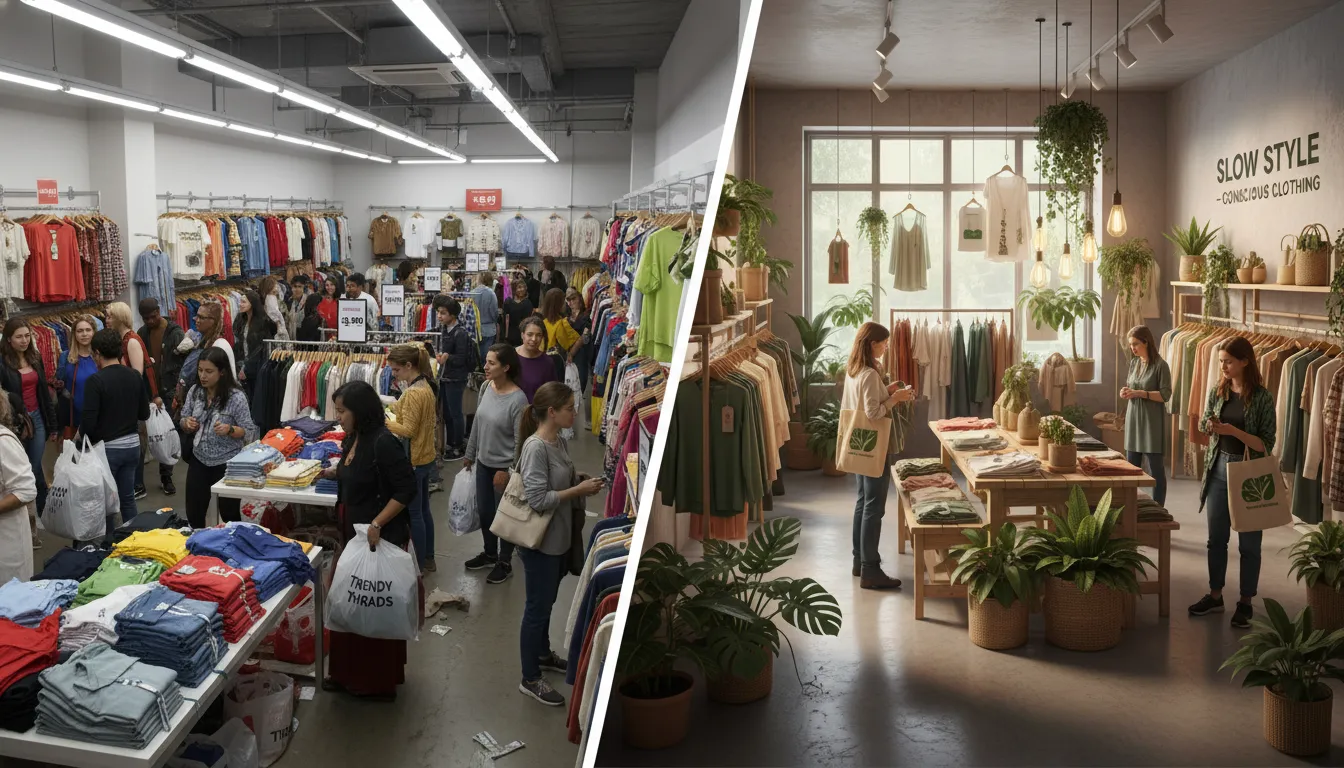
Side-by-side comparison of environmental, social, and economic metrics
Fast fashion relies on rapid cycles, low-cost synthetic fabrics, and high volumes. That model drives quick turnover and large waste streams. Sustainable brands slow the cycle, favor durable or recycled fibers, and prioritize cleaner production.
Environmentally, fast fashion links to large greenhouse gas and water footprints. Sustainable producers lower emissions through material choice, water-saving dyeing, and repairable design. Socially, fast fashion supply chains often show low wages and weak worker protections. Certified sustainable brands tend to publish audits, pay living wages, and support community programs.
| Dimension | Fast Fashion | Sustainable Brands |
|---|---|---|
| Production speed | Weeks from design to store | Months; focused batches and pre-orders |
| Materials | Cheap synthetics, low-cost blends | Organic cotton, ECONYL, recycled LYCRA, natural alternatives |
| Environmental impact | High CO2 and wastewater per item | Reduced emissions and wastewater with better processes |
| Worker conditions | Documented risks, variable oversight | Fair Trade, B Corp, audited supply chains |
| Cost to consumer | Low upfront price, high turnover | Higher upfront cost, longer garment life |
| End-of-life | High discard rates, landfill pressure | Repair, resale, recycling programs |
Oliberté shows how Fair Trade Certified™ and B Corp standards change outcomes. The brand ties wages to factory performance and invests in local communities. State Of Matter uses ECONYL and recycled LYCRA to cut raw-material impacts while keeping technical performance high.
Comparative studies show fast fashion can produce roughly 100 billion items a year with fast discard cycles. Sustainable alternatives lower production waste and lengthen garment lifespans. These case studies sustainable brands demonstrate measurable reductions in wastewater, emissions, and worker risk when compared side-by-side.
Decision framework for consumers weighing trade-offs
When choosing between price and impact, use a checklist. Look for certifications, published audits, and transparent material lists. Ask about expected lifespan and repair options. Factor in total cost per wear instead of just the ticket price.
- Check certifications and transparency reports.
- Prioritize durable or recycled materials.
- Estimate cost-per-wear to compare true value.
- Favor brands with take-back, repair, or resale programs.
Use this fashion comparison guide to align purchases with personal values and budgets. Small shifts, like choosing one higher-quality item or buying secondhand, expand access to eco-friendly fashion choices while reducing the overall footprint of your wardrobe.
Consumer behavior and psychology: drivers of overconsumption
Understanding consumer behavior fashion helps explain why wardrobes grow faster than closets. Quick trend cycles, aggressive marketing, and the thrill of a new purchase push many people toward impulse buys. That dynamic sits at the heart of overconsumption drivers across the apparel market, where low prices and constant novelty make frequent purchases feel normal.
Trend cycles, marketing, and impulse purchases
Retailers such as Zara and H&M use rapid product turnover to keep consumers engaged. Short-lived trends trigger a fear of missing out that feeds quick decisions. Social feeds amplify trends through influencer posts and tagged outfits, creating repeated prompts to shop.
Affordability and convenience raise the odds of unplanned buys. When a garment costs little, the mental barrier to purchase drops. Habit formation and hedonic rewards from shopping make repeat purchases automatic for many shoppers.
Value-attitude-behavior gap in clothing choices
People often report strong environmental values yet still choose fast fashion. This value-attitude-behavior gap appears in surveys and academic studies showing a mismatch between what consumers say and what they do. Cognitive dissonance and justification tactics help bridge that gap emotionally, without changing habits.
Research on buyer behavior highlights barriers like limited sustainable options, price sensitivity, and social pressures. Brands that educate shoppers about impacts can narrow the gap by making sustainable choices easier and more visible.
Strategies to shift habits toward mindful shopping
Small, practical tactics reduce impulse buying. Curated capsule wardrobe options cut decision fatigue by limiting choices to versatile, well-made items. Buying secondhand and prioritizing repair extend garment life.
Prompts at point of sale, clear labeling, and durable design steer purchases toward long-term value. Brands such as Patagonia and Everlane pair transparency with product guarantees to encourage thoughtful buying.
| Driver | Behavioral effect | Practical response |
|---|---|---|
| Rapid trend cycles | Frequent purchases to stay current | Adopt timeless pieces and rotate a capsule wardrobe |
| Low price points | Lower purchase resistance and higher disposal rates | Value-based budgeting and buy-on-need rules |
| Social media influence | Increased impulse buys from curated feeds | Limit exposure and follow mindful-curation accounts |
| Value-attitude-behavior gap | Expressed sustainability goals not matched by action | Use commitment devices and public pledges to align choices |
| Habit and hedonic rewards | Shopping becomes routine and emotionally reinforcing | Replace shopping rituals with low-cost experiences or formats |
Policy, regulation, and industry response
Public policy shapes how the apparel industry handles pollution, labor, and waste. Lawmakers, UN agencies, and NGOs press for clearer textile regulation to curb emissions and reduce wastewater from dyeing. Brands and governments face pressure to move from voluntary pledges toward enforceable rules that close gaps in oversight.
Existing regulations and international initiatives targeting textile impacts
Several frameworks guide action on chemical management, worker safety, and trade practices. WRAP, Fair Trade, and B Corp certifications give brands a compliance pathway and a way to show progress to consumers. United Nations bodies and UNCTAD have recommended measures to promote decarbonization and cut industrial wastewater in textile hubs.
Corporate commitments, transparency, and supply-chain audits
Many companies publish sustainability reports and run supplier audits to meet investor and customer expectations. Large retailers such as H&M and Patagonia disclose factory lists, emissions targets, and recycling pilots to improve corporate transparency fashion. Third-party certifications and regular audits help verify claims, though the depth and frequency of checks vary widely.
Policy gaps and recommended regulatory actions to promote sustainability
Gaps remain in enforcement, extended producer responsibility, and consistent reporting standards. Policymakers should require standardized disclosures, restrict hazardous chemicals, and set targets for textile waste reduction. Incentives for circular systems, grants for recycling infrastructure, and clearer penalties for noncompliance would push the sector toward cleaner production.
Debates around fast fashion vs sustainable persist in legislative halls. A mix of stronger textile regulation and improved corporate transparency fashion could narrow that divide. Well-crafted policy fashion can shift business models toward durability, reuse, and meaningful reductions in the industry’s environmental footprint.
How to choose: practical tips for eco-friendly fashion choices
Choosing better clothes starts with a simple plan. Think about fit, fabric, and the story behind the brand. Small changes add up when you move from fast fashion vs sustainable options.
Checklist for evaluating brands
Use a short checklist sustainable brands so you buy with confidence. Look for third-party certifications such as Fair Trade, Global Recycled Standard, GOTS, and Certified B Corporation status. Check material lists for ECONYL, recycled LYCRA, MiDori, or organic cotton. Read brand transparency reports and traceability pages. Favor companies that publish supplier audits, energy use, and take-back or repair policies.
Wardrobe strategies
Capsule wardrobe options help curtail impulse buying and improve outfit flexibility. Start with 8–12 versatile pieces in neutral colors and add one statement item each season. Mix new buys with secondhand finds from platforms like Depop or local consignment shops. Prioritize repairable cuts and classic lines to extend garment life.
Everyday actions
Small habits stretch the life of clothes. Wash less often and choose cold water cycles to save energy and reduce fiber shedding. Mend small holes, replace buttons, and use patching to avoid tossing items. Use brand take-back programs or donation centers that accept worn textiles for reuse or recycling. Dispose responsibly by checking local textile recycling rules.
When wondering how to choose sustainable fashion, think long term. Compare prices against expected wear years and care needs. Keep a brand checklist sustainable brands in your phone to check claims before you buy. Over time, capsule wardrobe options and thoughtful purchases create cleaner closets and clearer choices between fast fashion vs sustainable paths.
Innovations and future directions in apparel sustainability
New research and industry action point to practical routes away from wasteful models. Brands such as Patagonia and Stella McCartney pilot cleaner production and design for recycling. Academic studies by Brydges and Roos note that circular economy practices can cut resource use while improving supply-chain transparency.
Material breakthroughs
Bio-based fibers and regenerated materials are gaining ground. Companies use ECONYL regenerated nylon and recycled LYCRA to lower impact. MiDori and similar low-impact finishes reduce water and chemical loads. These shifts pair research and certification to validate claims and widen adoption of recycled fibers.
Business-model shifts
New models change how clothing is valued. Rental and resale fashion platforms, plus retailer take-back schemes, extend garment life and reduce demand for new pieces. Rent the Runway and The RealReal show consumer appetite for rental and resale fashion, while in-store take-back programs help close use loops.
Technology and design for circular systems
Advances in textile recycling and mixed-fiber separation matter for closed-loop manufacturing. Mechanical and chemical recycling technologies are improving recovery rates for blended garments. Design teams increasingly specify mono-materials and use detachable trims to aid recycling at end of life.
A practical roadmap links material innovation, rental and resale fashion, and closed-loop manufacturing. This trio can shift the balance in fast fashion vs sustainable debates by lowering production emissions and cutting waste. Policy, clearer metrics, and consumer demand will shape which technologies scale next.
Conclusion
Fast fashion vs sustainable presents a clear choice: quick, low-cost trends that fuel overconsumption and pollution, or thoughtful design that values ethics and longevity. This fashion comparison guide shows fast fashion’s reliance on polyester, high water use, and social harms, while sustainable approaches cut waste, favor organic and recycled fibers, and support fair labor. Readers can use this summary to weigh immediate affordability against longer-term environmental and social costs.
Sustainable brands like Oliberté and State of Matter offer practical models for ethical supply chains and durable products. Simple actions—capsule wardrobe options, buying secondhand, repairing garments, and checking certifications—make eco-friendly fashion choices accessible. For more detailed comparisons and data on environmental impacts and solutions, see this fast fashion overview and analysis at fast fashion vs sustainable fashion: the environmental.
Market trends show sustainable fashion growing, but change requires both consumer shifts and policy action. Use the decision framework in this fashion comparison guide to balance price and principles, support brands that publish transparent supply chains, and push for circular systems. Small daily choices add up: choosing higher-quality pieces and practicing mindful care helps move the industry toward a greener, fairer future.
FAQ
What’s the core difference between fast fashion and sustainable fashion?
Fast fashion prioritizes speed, low cost, and high volume—turning trends into cheaply made garments and encouraging quick disposal. Sustainable fashion emphasizes environmental responsibility, fair labor, durable materials, and lifecycle thinking (design for repair, reuse, and recycling). The two differ across production speed, material choices, worker conditions, and environmental awareness.
How does fast fashion’s business model work?
Fast-fashion brands compress design-to-shelf cycles, outsource mass production to low-cost countries, and minimize quality control to keep prices low. That model relies on rapid trend translation, short garment lifespans, and high turnover to sustain volume sales, producing roughly 100 billion garments annually worldwide.
How big is the environmental footprint of the apparel industry?
The apparel sector contributes substantially to global impacts—estimates range from about 2–10% of global carbon emissions depending on methodology, large shares of industrial wastewater, and tens of millions of tons of textile waste each year. Fast fashion’s high production and disposal rates amplify these effects.
Which environmental harms are tied to dyeing and finishing?
Dyeing and finishing generate wastewater loaded with colorants and chemicals, can contaminate rivers, and may release persistent compounds (some studies highlight chemicals like benzothiazole). These processes contribute to ecosystem damage, human-health risks, and local pollution problems where processing occurs.
Where are most fast-fashion garments made?
Large-scale manufacturing commonly occurs in countries such as Bangladesh, China, India, Pakistan, and Indonesia—regions where labor and input costs are lower. Cost pressures in sourcing often lead to compressed lead times and limited transparency on working conditions.
What social and labor issues are associated with fast fashion?
Fast-fashion supply chains have documented problems: low wages, unsafe working environments, forced or child labor in some regions, excessive hours, and weak enforcement of labor rights. These human-rights risks contrast with sustainable brands that focus on livable wages, better conditions, and certifications like Fair Trade or WRAP.
How does sustainable fashion address worker welfare?
Sustainable brands often pursue fair wages, safer factories, supplier audits, and community engagement. Certifications (Fair Trade, B Corp, WRAP) and transparent reporting are tools used to validate labor practices and support local economic benefits.
What materials does fast fashion typically use, and why is that a problem?
Fast fashion frequently uses cheap synthetic blends and low-cost natural fibers without emphasis on durability. These materials often wear out faster, contribute to microplastic shedding during washing, and make recycling more difficult—shortening garment lifespans and increasing waste.
What are safer material choices promoted by sustainable brands?
Sustainable brands use recycled fibers (regenerated nylon such as ECONYL, recycled LYCRA), certified natural fibers, bio-based materials, and lower-impact finishes like MiDori. They prioritize material traceability, recycled content, and regenerative agriculture when available.
How significant is textile waste, and how much do U.S. consumers discard?
Global textile waste totals tens of millions of tons annually; some reports cite about 92 million tons. In the U.S., the average person discards roughly 80 pounds of clothing per year, and textiles make up a notable share of landfill volume and incineration streams.
Do synthetic clothes release harmful microplastics or chemicals?
Yes. Synthetic textiles shed microplastics during washing, which enter waterways. Chemical finishes can permeate skin or persist in the environment; research has raised concerns about compounds that may irritate or cause allergic responses, highlighting the need for safer chemistries and wastewater controls.
What does lifecycle thinking mean in sustainable fashion?
Lifecycle thinking evaluates a garment’s environmental and social impacts from raw material sourcing through manufacture, use, and end-of-life. It encourages design for durability, repairability, recyclability, and systems—like take-back programs—to reduce resource intensity and waste.
Is sustainable clothing always more expensive, and is it worth it?
Upfront prices for sustainable goods are often higher, reflecting better materials and fair labor. Over time, investing in quality pieces, building a minimalist or capsule wardrobe, and practicing repair can yield cost savings and reduce environmental costs that are otherwise externalized in cheap garments.
How can I evaluate a brand’s sustainability claims?
Look for transparent supply-chain information, third-party certifications (Fair Trade, GRS, WRAP, B Corp), clear material breakdowns (recycled content, regenerated fibers), repair or take-back programs, and published impact or audit reports. A simple checklist helps compare expected lifespan, repairability, and traceability.
What practical steps can I take to make my wardrobe more sustainable?
Buy fewer, better-made pieces; favor timeless designs; shop secondhand or resale; choose items with recycled or certified materials; mend and care for garments (wash less and colder); use take-back programs; and donate or recycle responsibly instead of throwing clothes away.
How effective are capsule wardrobes and minimalist options?
Capsule wardrobes reduce impulse purchases, clarify needs, and extend use of garments—helping lower costs and waste. Well-chosen, versatile pieces mean fewer replacements and a smaller carbon and material footprint over time.
What industry innovations help close the loop on apparel waste?
Innovations include regenerated fibers (ECONYL), advanced textile recycling technologies, mixed-fiber separation methods, rental and resale business models, and design-for-recycling standards. These approaches, paired with take-back programs, aim to reduce virgin-material demand and landfill disposal.
What policy changes would accelerate sustainable apparel production?
Recommended actions include extended producer responsibility, standardized reporting and metrics, stricter chemical and wastewater controls, stronger enforcement of labor laws, incentives for circular systems, and public investment in textile recycling infrastructure.
How should I weigh price versus sustainability when shopping?
Balance short-term budget constraints with long-term costs. Use a decision framework: check certifications, material durability, repairability, transparency, and the brand’s lifecycle commitments. When possible, prioritize quality staples, secondhand finds, and gradual wardrobe transformation to align values with spending.
Are there recognizable brands or models that illustrate sustainable approaches?
Examples include Certified B Corporations and Fair Trade brands that prioritize worker welfare and traceability. Some brands use recycled materials (e.g., regenerated nylon, recycled LYCRA) and partner with suppliers to reduce energy and waste. Look for transparent case studies and verifiable certifications when evaluating claims.
How can I avoid greenwashing when choosing eco-friendly fashion?
Demand specifics: ask for material composition, supplier locations, audit reports, and third-party certifications. Beware vague claims like “eco” or “sustainable” without evidence. Preference should go to brands that publish measurable targets, independent verification, and clear product lifespans.
What behavior changes from consumers make the biggest difference?
Reducing purchase frequency, buying durable items, repairing instead of replacing, choosing secondhand, washing less and at lower temperatures, and supporting brands with transparent supply chains and circular programs all cut resource use and waste effectively.
Where can I learn more about certifications and how they differ?
Research reputable standards: Fair Trade focuses on labor and community benefits; Global Recycled Standard (GRS) tracks recycled content; WRAP covers factory compliance; B Corp evaluates broader social and environmental performance. Each standard has distinct scope—compare them against your priorities.
Will sustainable fashion replace fast fashion entirely?
Systemic change is gradual. Sustainable fashion is growing, driven by consumer demand, policy pressure, and innovation, but affordability and convenience keep fast fashion widespread. Progress will depend on regulation, scalable recycling, business-model shifts (rental/resale), and consumer behavior changes.