

Surprisingly, global fibre production nearly doubled from 58 million tonnes in 2000 to 116 million tonnes in 2022 — a scale that reshaped how brands and consumers think about clothing. That jump helps explain why a practical fashion trends guide is now as much about reducing waste as it is about style.
The U.S. market is moving fast: retailers increasingly blend resale, rental, and repair with traditional retail to meet demand and cut waste. Platforms like Vinted and initiatives from brands such as Uniqlo and H&M show how resale and repair are becoming mainstream parts of the apparel mix.
This short section outlines best practices you can use today. It ties environmental context to on-the-ground actions: mixing trend forecasting with circular business models, using data tools for smarter buys, and offering clear guidance to shoppers.
Key Takeaways
- Combine trend forecasts with circular models — resale, rental, and repair reduce overproduction.
- Use tools like WGSN, Meltwater, and PLM integration to align product assortments with demand.
- Learn from major players: Uniqlo repair services and H&M’s pre-loved store show scalable options.
- Track fibre and consumption trends to inform sourcing and design choices for longevity.
- For more expert advice and practical fashion trends tips, explore this deeper guide at decoding fashion trends.
Understanding the Environmental Cost of Fashion
The fashion industry balances creativity with a heavy environmental footprint. Brands from H&M to Levi’s and Gucci shape consumer demand, yet growth has driven water use, waste, and emissions to alarming levels. Readers using a fashion trends guide should weigh creative choices against measurable impacts.
Key numbers help clarify scale. Global fibre production nearly doubled from 58 million tonnes in 2000 to 116 million tonnes in 2022, with forecasts suggesting 147 million tonnes by 2030. The sector uses about 215 trillion liters of water each year and contributes between 2% and 8% of global carbon emissions. Less than 1% of material used to make clothing returns as new clothing, while roughly 85% of textiles end up in landfill annually.
Key statistics on industry impact
Fashion industry statistics show rapid consumption growth. Consumers bought 60% more garments in 2014 than in 2000, yet keep them for about half the time. One garbage truck of unwanted clothes is burned or dumped every second. Value is lost when materials are not reused; the Circularity Gap Report notes only 0.3% of resources in textiles come from recycled inputs.
Resale marketplaces slow landfill flow, though oversupply and inconsistent quality demand smarter tech. Forecasting tools and PLM systems can track material footprints to reduce overproduction and retain value across the supply chain. For a concise overview of sustainable fashion initiatives and data, see a practical update on sustainable fashion at genevaenvironmentnetwork.org.
Microplastics and synthetic fibres
Synthetic fibres dominate fibre mixes. Polyester and nylon made up about 60–64% of global fibre production in recent years. Roughly 60% of clothing and 70% of household textiles contain synthetic fibres, which rely on fossil feedstocks and emit microplastics during washing.
Estimates put microfiber release at about 500,000 tonnes annually, the equivalent of billions of plastic bottles. Textile-related microplastics account for a significant share of ocean pollution and a growing portion of plastic waste overall. Addressing fiber choice and garment construction is central when using any fashion trends guide aimed at sustainability.
Incorporating Circular Fashion Best Practices
A practical path to circularity begins with clear steps brands and consumers can take today. This section outlines what circular fashion looks like in practice and which business models help close the loop. The aim is to make sustainability actionable without jargon.

What circular fashion means
Circular fashion centers on extending garment life and keeping materials in use. The core idea follows reduce reuse repair resell recycle as a simple framework that guides design, production, and post-sale services.
Design for durability, easier repair, and fibre-to-fibre recyclability reduces resource waste. The EU Strategy for Sustainable and Circular Textiles (2023) aims to embed these principles in law so more products are made to last.
Small changes in labeling, modular construction, and clearer care instructions nudge shoppers toward longer use. Retailers such as Uniqlo and H&M have introduced in-store repair and pre-loved outlets to encourage reuse.
Business models that support circularity
Several commercial approaches unlock circular value. Resale marketplaces like Vinted and buy-back schemes from hessnatur turn returned or pre-owned items into fresh revenue. Rental and subscription models reduce the number of single-use purchases.
Reverse logistics, refurbishing and graded resale let brands recover value from returns. Advanced recycling projects use optical sorting, robotics, and AI to process textiles that cannot be resold. These innovations aim to raise the share of recycled fibres beyond the current low levels.
Linking circular offers to forecasting and product-lifecycle management reduces overproduction. Better demand planning makes rental and resale inventory easier to manage and lowers the share of unsold stock, which helps meet climate targets and protects margins.
| Model | How it works | Benefits |
|---|---|---|
| Resale marketplaces | Peer-to-peer or brand-run platforms list used items for purchase | Recovers value, extends garment life, taps growing $100–$120B market |
| Buy-back & trade-in | Brands repurchase worn items, grade condition, and resell | Builds loyalty, reduces waste, creates controlled secondhand supply |
| Rental & subscription | Short-term garment use via memberships or single rentals | Fewer single-use buys, higher lifetime ROI per item |
| Repair & refurbishment | Onsite or partner services restore garments for resale | Extends use, supports premium resale pricing, lowers returns waste |
| Advanced recycling | AI-driven sorting and fibre recovery for non-resellable textiles | Increases recycled content, cuts material value loss, feeds new supply |
Explore a practical industry perspective in this executive guide to circularity for real-world examples and metrics that show how circular models scale.
For teams tracking trends, simple fashion trends tips include testing rental pilots, launching graded resale, and investing in repair training. These moves create new revenue streams while lowering environmental impact.
Fashion trends guide
Use a practical fashion trends guide to bridge inspiration and inventory. A clear guide helps buyers choose pieces that match brand values, sustain circular initiatives, and appeal to shoppers. Keep guidance short, focused, and tied to measurable goals like resale potential or repairability.
How to use a trends guide strategically
Start by defining what counts as short wins and long returns. Distinguish short-term vs long-term forecasting so teams know when to chase micro-movements and when to protect core identity. Short-term moves can boost traffic; long-term choices preserve brand equity.
Embed sustainability into buying rules. Note which silhouettes work well for rental or resale and highlight those on product pages. Train merchandising teams to weigh trend fit against circular actions such as repair programs.
Feed forecasts into Product Lifecycle Management systems to speed concept-to-consumer workflows and cut excess production. Use seasonal trend checks to adjust buys, keeping inventory flexible without losing coherence.
Tools and sources for forecasting
Combine runway scanning, street-style observation, and social listening for balanced insight. Services like WGSN offer deep fabric and color research. Meltwater provides real-time media signals with sentiment analysis. Heuritech uses image recognition to spot visual shifts.
Triangulate those services with in-store sales and social engagement metrics. Use the advice in a practical retail buyer guide to sharpen observational routines and apply runway-to-retail translation.
| Source | Strength | Best use |
|---|---|---|
| WGSN | Global trend reports, material forecasting | Strategic season planning and long-range color palettes |
| Meltwater | Real-time media monitoring, sentiment data | Detecting micro-trends and consumer reaction |
| Heuritech | Image-recognition of social visuals | Visual trend validation and rapid street-style signals |
| In-house sales + PLM | Proprietary performance data, faster product updates | Integrating forecasts into assortments and reducing waste |
Leveraging Data and AI for Accurate Forecasting
Predicting demand now blends numerical sales history with cultural signals, image analysis, and social sentiment. Smart teams pair quantitative records with qualitative insights to spot shifts early and reduce costly errors. These methods form the backbone of data-driven forecasting and help brands act faster on trends.
Data-driven forecasting methods
Start with clean sales and return data to reveal true demand. Add search volume, clickstream behavior, and social listening to capture what shoppers want right now. Mix in runway and image analysis so visual trends feed into planning. This multi-source approach improves precision and supports traceability for reporting and compliance.
Retailers such as H&M use POS and receipt analysis to tune inventory by item and store. Combining these feeds with free social signals can surface rising interest without heavy investment. For a practical primer on integrating diverse datasets, review guidance from industry sources like this overview.
AI and machine learning applications
Machine learning spots subtle patterns across millions of posts and images that humans might miss. Generative AI speeds tagging and attribute enrichment, which lets catalogs match shopper intent more quickly. These capabilities are central to AI forecasting fashion, enabling faster product discovery and better personalization.
Demand sensing combines near-term signals with model predictions to tighten replenishment cycles. Tools from established vendors run automated workflows that cut manual effort and free teams to focus on strategy. The best practices here include continuous model retraining, human review of edge cases, and clear KPIs for accuracy and bias monitoring.
- Blend historical sales, social signals, and image analysis for fuller context.
- Validate models with held-out data and live A/B tests in select stores.
- Document data lineage to support sustainability reporting and standards.
- Keep humans in the loop to interpret creative and cultural shifts.
When brands follow these best practices, they reduce overproduction and align stock with customer demand. That alignment drives better experiences, higher conversion rates, and more sustainable outcomes without sacrificing creativity.
Practical Fashion Trends Tips for Consumers
Smart choices make fashion feel good for your wallet and the planet. Focus on simple habits that stretch use cycles, cut waste, and keep your wardrobe aligned with current fashion trends tips without overspending.
Budget-aware sustainable choices
High prices and living costs push many shoppers toward fewer purchases and resale. Start by checking resale value before you buy. Platforms like Vinted and Depop let you test demand for styles and recover costs when you resell.
Prioritize quality over quantity. A well-made blazer from Uniqlo or Everlane can replace several fast-fashion pieces and hold style through seasons. Buy neutral tones and classic cuts to increase wearable years.
Shop second-hand locally when possible. Thrift stores and consignment shops often carry near-new items at a fraction of the cost. This approach supports circularity while keeping your budget in check.
Care, repair, and longevity
Simple home fixes extend garment life. Sewing hems, replacing buttons, and mending small holes add cycles to favorite pieces. Uniqlo’s repair programs show how brand repair services can keep items in use longer.
Reduce washing frequency to limit wear and minimize microfiber release. When you do wash, use a microfiber filter or a Guppyfriend-style bag to catch fibers. Choose natural or low-shed materials where practical to lower microplastic pollution.
Use local repair services for complex fixes. A small alteration or a professional patch can turn a worn item into a long-lasting staple. Tracking repair and longevity helps you get the most value per dollar spent.
- Check resale demand before buying to make budget sustainable choices.
- Buy fewer, better items to follow fashion trends tips without waste.
- Fix small issues at home and use repairs to boost repair and longevity.
- Wash less, filter microfibers, and pick low-shed fabrics to reduce impact.
Retailer Best Practices to Reduce Waste and Improve Transparency

Retailers can cut waste and build trust with clear, practical steps. Start by mapping supply chains to improve traceability and then publish standardized impact metrics. Many shoppers want easy-to-find evidence of claims, so clear labelling and accessible reporting matter.
Adopt traceability systems that follow UN frameworks and industry compacts. Use batch-level tracking to show material origins, production dates, and transport steps. That approach supports compliance with the Corporate Sustainability Reporting Directive and helps teams prepare consistent disclosures for regulators and customers.
Traceability and reporting
Publish measurable metrics such as carbon, water use, and recycled content on product pages. Tie those figures to a simple explanation of how they were measured. Retailers that disclose impact data reduce the chance of greenwashing and give consumers confidence.
Implement digital tools that log supplier audits, certifications, and worker conditions. Retail technology from established vendors makes it feasible for brands of all sizes to share traceable records with shoppers and investors.
Product labelling and consumer guidance
Label care instructions, repair options, and resale potential so customers can extend product life. Offer clear size guidance and return-reduction tips to cut overproduction and unnecessary shipping.
Provide resale and repair services directly or via partners, and show estimated resale value to inform buying decisions. Make sustainable choices simple to find by linking product labels to detailed evidence pages and third-party certifications.
Practical retailer best practices include publishing verification, training store staff to explain impact data, and building a consumer-facing portal for questions. Brands such as Patagonia and Nudie Jeans show how labels and transparent claims can strengthen loyalty.
For a deeper look at ethical retail steps and traceability examples, read this guide on ethical fashion practices: ethical fashion practices.
| Action | Benefit | Practical Step |
|---|---|---|
| Supply chain traceability | Improved credibility and easier CSRD compliance | Implement batch tracking and publish supplier maps |
| Standardized impact reporting | Reduces greenwashing risk and builds trust | Report carbon, water, and recycled content per product |
| Clear product labelling | Empowers consumers and lowers returns | Include care, repair, and resale guidance on labels |
| On-demand and made-to-order production | Less overproduction and lower inventory costs | Adopt algorithmic production planning or partner with made-to-order suppliers |
| Third-party certifications | Independent verification of sustainability claims | Use GOTS, OEKO-TEX, Fair Trade and disclose certificates |
Choosing the right fabrics and construction methods changes how garments perform on the planet and in the closet. Brands that plan material use across seasons avoid one-off items that waste resources. Product teams should link forecasting and PLM to material sourcing so demand for sustainable materials grows with actual sales.
Look beyond buzzwords and weigh trade-offs. Organic cotton supports millions of livelihoods but can still require careful water and pesticide management. The Better Cotton Initiative helps improve practices, while recycled fibres remain rare in the market. Scaling textile-to-textile recycling will take design choices that favor mono-materials and simpler separations.
Materials with lower environmental impact
Choose fibres that reduce water, pesticide, and chemical burdens. Recycled polyester and responsibly produced viscose cut virgin feedstock needs. Bio-based fibres like Tencel and newer seaweed-based textiles offer lower-impact options. Aimer’s seaweed fibre shows how brands can add performance benefits, such as antibacterial comfort, while exploring marine-based feeds.
Design for longevity and recyclability
Design decisions determine whether a garment is mended or trashed. Prioritize durable stitching, reinforced stress points, and timeless silhouettes to extend wear. Use mono-material constructions and avoid mixed trims that block recycling. Modular pieces and clear disassembly paths make recycling feasible and improve second-life value.
Small technical shifts reduce microfiber loss. Tighter weaves and finishes that trap fewer fibres help lower microplastic shedding. Label garments with repair instructions and compatible recycling streams so consumers know how to keep items in use longer or return them for recycling.
Practical fashion trends tips
- Forecast sustainable material demand across full collections, not capsule drops.
- Test mono-material prototypes early to confirm recyclability at scale.
- Partner with certified suppliers and recycling facilities to close loops.
- Educate customers on care and repair to lengthen product life.
Brands that align sourcing, design, and forecasting gain credibility and reduce waste. Thoughtful material choice plus design for recyclability makes trend-led ranges more honest and durable while helping the industry move toward higher recycled-fibre shares.
How Brick-and-Mortar and Online Marketplaces Can Coexist
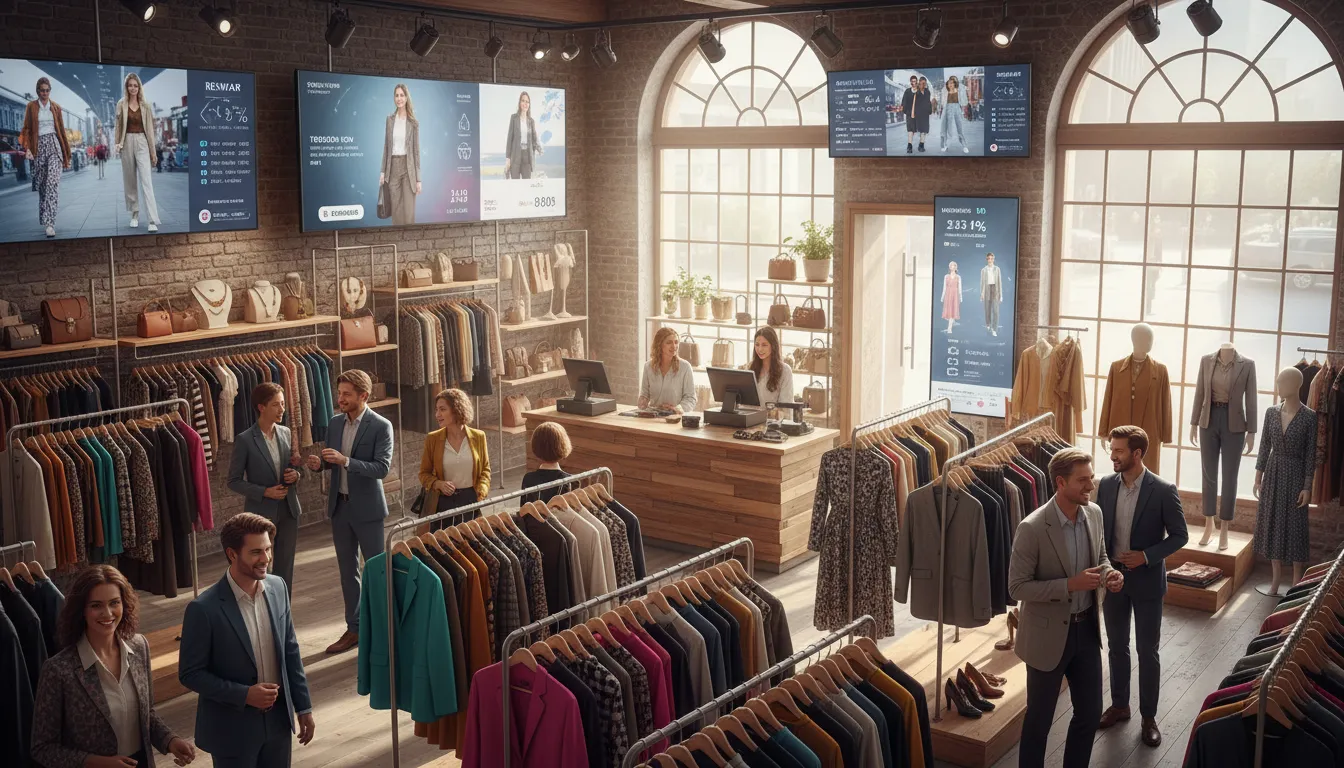
Retail today blends physical comfort with digital reach. Shoppers still want to touch fabrics and try fits in person before committing, a habit that strengthens trust for resale and rental items. Brands that bring circular offerings into the places consumers already visit close the gap between intent and action.
Why physical retail still matters
Stores provide instant verification of condition and fit. H&M’s pre-loved store in New York and Uniqlo’s in-store repair counters show how a storefront builds confidence in second-hand buying. Customers who can inspect seams, try sizes, or see repair work are more likely to choose sustainable options.
Physical spaces act as education hubs. Staff can demonstrate care tips, discuss material choices, and explain listings. These moments convert curious browsers into repeat buyers within circular models.
Omnichannel circular services
Successful programs mix online marketplaces with in-store touchpoints. Brand-run resale platforms, buy-back desks, rental lockers, and repair stations sync to let customers move between channels with ease.
Tools like product lifecycle management and demand forecasting coordinate stock and service capacity across channels. That coordination reduces returns and unsold inventory by matching availability to local demand patterns.
A practical playbook includes clear signage, unified inventory, and staff trained to handle resale and repair logistics. Partnerships with platforms such as Vinted expand reach while brick-and-mortar resale hubs keep the tactile experience intact.
Use the fashion trends guide to plan which items suit resale or rental by region and season. This planning helps teams allocate floor space, schedule repair windows, and shape online assortments so circular services meet real customer needs.
Communicating Trend-Led Sustainability to Different Markets
Brands must adapt messaging so sustainability feels relevant across regions. Start by mapping local values, buying habits, and trust drivers. Use measured claims and local examples to build credibility while keeping tone accessible.
For China, frame sustainability around family wellbeing and social standing. Highlight product safety, health benefits, and community stories. Show resale value and care tips to link trend appeal with long-term savings.
In the U.K. and Germany, center communication on transparency and verifiable evidence. Share measurable outcomes, lifecycle data, and third-party certifications. Clear reporting reduces skepticism and supports informed choices.
Budget-sensitive markets respond to practical messages. Emphasize affordability, durability, and resale advantages. Offer fashion trends tips that show how slow-fashion pieces mix with current looks.
Use influencer partnerships with care. Choose creators who disclose sponsored posts and who can speak credibly about product lifecycle. Micro-influencers often drive preloved interest while maintaining trust.
Social platforms shape demand quickly. Track shifts with tools like Meltwater and Heuritech to spot sentiment and visual cues. Tie those insights into product lifecycle management so claims remain verifiable.
Operationalize expert advice into creative briefs. Ask design, marketing, and merchandising teams to cite the metrics behind each claim. That makes campaigns defensible and repeatable across markets.
Below is a compact reference to guide localization choices and channels for different regions.
| Region | Core Message | Top Channels | Creative Signal |
|---|---|---|---|
| China | Family wellbeing, safety, social proof | Weibo, WeChat, short video platforms | Health-focused materials, community testimonials |
| United Kingdom | Transparency, evidence, anti-greenwashing | Instagram, TikTok, editorial partnerships | Lifecycle data, certification badges, case studies |
| Germany | Traceability, measurable impact | Instagram, YouTube, sustainability forums | Supply-chain visuals, audit summaries |
| Price-sensitive markets | Affordability, longevity, resale value | Facebook, local marketplaces, WhatsApp groups | Cost-per-wear examples, repair guides |
Continuously monitor sentiment and visual trends to refine messages. Regular updates informed by data keep communicating sustainability credible and aligned with market nuances.
Reducing Overproduction Through Demand Forecasting and PLM
Overproduction drains resources and creates extra waste. Brands can cut that loss by linking demand signals with product development tools. This approach helps reduce excess stock while keeping styles fresh for shoppers.
Start by feeding sales history, returns, and social sentiment into demand models. Use those signals to guide smaller, more frequent replenishments and targeted pre-orders. This method uses demand forecasting fashion to match supply with real customer interest.
PLM systems centralize product data and workflows. Integrating forecasting into PLM helps align trend insights with design and production. Following PLM best practices shortens time-to-market and reduces misaligned runs that become unsold inventory.
Real-world wins show the impact. H&M uses AI on receipts and returns to tune inventory levels and lower unsold stock. Retailers that shift from large seasonal buys to limited runs or pre-orders see fewer returns and less markdown pressure. These tactics help reduce overproduction and protect material value across the value chain.
Practical steps any team can use:
- Feed granular sales and returns data into demand models.
- Combine trend signals with PLM workflows to lock designs only when demand is clear.
- Adopt smaller, frequent replenishment cycles and pre-order programs.
Smart forecasting and disciplined PLM best practices create a tighter loop from concept to shelf. That loop lowers waste, improves margins, and keeps product closer to actual consumer demand.
Policy, Standards, and Industry Initiatives Shaping Trends
Policy and industry action are changing how fashion moves from concept to consumer. New rules nudge brands toward circularity, while coalitions set shared goals for climate, traceability, and fair work. These shifts push adoption of best practices across design, sourcing, and reporting.
The EU textile strategy and the Corporate Sustainability Reporting Directive (CSRD) require clearer impact data and stronger product rules. Governments in China and the United States offer incentives for sustainable innovation. Such policy drivers make it easier for companies to plan long-term investments in cleaner materials and better production methods.
Industry efforts link standards to action. The Fashion Industry Charter for Climate Action commits signatories to science-based targets and net-zero plans. The UN Alliance for Sustainable Fashion and UNECE traceability programs help align reporting and supply chain tools across borders.
Trade and sector organizations support worker rights and material sourcing. The Better Cotton Initiative raises standards for cotton farming. The International Trade Centre’s Ethical Fashion Initiative connects artisans to markets. The ILO advances decent work across garment supply chains.
Brands that follow these frameworks tend to integrate forecasting, PLM, and traceability sooner. That alignment boosts transparency for consumers and compliance with evolving rules. Adopting robust reporting frameworks makes it easier to show progress and meet investor expectations.
Below is a compact comparison of major drivers and the practical effects they have on brands and designers.
| Driver | Core Focus | Practical Effect on Brands |
|---|---|---|
| EU textile strategy | Circular design, product rules, recyclability | Design changes, material audits, extended producer responsibility |
| CSRD (reporting) | Standardized sustainability disclosure | Improved data systems, third-party audits, investor-ready reports |
| Fashion Industry Charter for Climate Action | Net-zero targets, emissions reduction | Science-based targets, energy-efficient sourcing, supplier engagement |
| UN Alliance & UNECE programs | Traceability, policy guidance, toolboxes | Supply chain mapping, policy-aligned trace systems, cross-border collaboration |
| BCI, ITC Ethical Fashion, ILO | Responsible sourcing, market access, labor standards | Supplier training, improved livelihoods, verified claims |
Start with a tight audit of materials and suppliers to spot quick wins. Review fibre content, certifications, and supplier capacity. Use findings to set targets for recycled fibre share and lower-impact materials. This creates a practical base for any fashion trends guide your team follows.
Run pilots for circular services such as resale, rental, repair, and buy-back. Test one city or one product line before scaling. Track customer uptake, return rates, and resale conversion. Brands like H&M and Uniqlo show how repair and pre-loved programs raise engagement and reduce waste.
Invest in forecasting, PLM, and AI tools to align production with demand. Feed trend inputs from WGSN, Meltwater, and Heuritech into product lifecycle management. That step links design choices to supply chain actions and reduces overproduction.
Practical roadmap for adopting best practices
Follow a clear rollout sequence that teams can execute. Begin with audit and target-setting. Move to pilot circular services and product redesign. Integrate forecasting outputs into PLM. Use customer data to refine assortments and pricing.
Keep pilots short and measurable. Use resourcing plans and a single cross-functional lead to speed decisions. Share early wins internally to build momentum. Use expert advice from industry analysts and trend forecasters to validate each stage.
Metrics and KPIs to track progress
Choose KPIs that link back to both business and sustainability goals. Track recycled content percentage and the share of recycled fibres in new collections. Monitor textile-to-textile recycling rates and aim to raise the current low share year on year.
Measure uptake of circular services with specific indicators: resale uptake, participation in buy-back programs, and repair service utilization. Monitor return rates, sell-through, and resale conversion to judge commercial feasibility.
| Focus Area | Key Metric | Target Example |
|---|---|---|
| Material sourcing | Recycled fibre percentage | Increase to 20% of input fibres within 3 years |
| Production planning | Sell-through rate | Achieve 85% sell-through per season |
| Circular services | Resale conversion & buy-back participation | Drive 10% of customers to resale options in year one |
| Customer services | Repair uptake | Match Uniqlo benchmark of repair visits per 1,000 customers |
| Environmental impact | CO2 and water reductions | Reduce scope 3 emissions by 15% over 5 years |
| End-to-end value | Textile-to-textile recycling rate | Raise recycling rate above 5% within 4 years |
Apply expert advice at each stage so actions stay practical. Repeat audits and update the fashion trends guide regularly to reflect new materials, tools, and consumer behavior.
Conclusion
This fashion trends guide pulls together practical best practices and clear actions for both consumers and brands. Combining resale, rental, repair, and transparent communication with traditional retail opens real circular fashion opportunities, while investments in AI, Autosort, and in-store circular services make sustainable choices easier to access.
The industry’s footprint—rising fiber production, heavy water use, and a significant share of global emissions—means urgent change is needed. Designers, material suppliers, and policymakers must work together to cut waste, keep textiles in use, and prevent the 85% of garments that now head to landfill.
Data-driven tools like WGSN, Meltwater, and Heuritech, plus PLM integration and smarter demand planning, help reduce overproduction and align assortments with actual demand. Follow fashion trends tips and expert advice: buy less, choose quality, repair and resell, and favor brands that publish evidence-backed sustainability metrics.
Brands should audit materials, invest in forecasting and PLM, offer circular services, and report transparently to rebuild trust. Taken together, these steps form a concise roadmap of best practices that balance style, profit, and planet for the U.S. market and beyond.
FAQ
What are the most important best practices for aligning fashion trends with sustainability?
Focus on reducing overproduction, designing for longevity and repair, prioritizing durable and low-impact materials, and integrating circular services—resale, rental, repair, and buy-back—into retail. Use forecasting and PLM to match supply with demand, publish transparent impact metrics (carbon, water, recycled content), and pilot omnichannel circular offerings so customers can buy, repair, or resell where they shop.
How big is fashion’s environmental footprint and which statistics matter most?
The global apparel industry is roughly a $1.3 trillion market that employs over 300 million people. Fibre production nearly doubled from 58 million tonnes in 2000 to 116 million tonnes in 2022 and could reach 147 million tonnes by 2030. The sector accounts for about 2–8% of global carbon emissions, is a major water consumer (hundreds of trillions of liters annually), and sends roughly 85% of textiles to landfill each year. Less than 1% of textiles are recycled into new clothing, and only about 8% of fibres in 2023 came from recycled sources.
How do microplastics and synthetic fibres affect sustainability?
Around 60–64% of global fibre production is synthetic (polyester, nylon), and synthetic textiles are a major source of microplastic pollution. Washing synthetic clothes releases hundreds of thousands of tons of microfibers into oceans each year—equivalent to billions of plastic bottles—and contributes significantly to greenhouse gas emissions. Choosing lower-shed materials, filtering wash water, and reducing synthetic use where possible can lower impact.
What does circular fashion actually mean for brands and consumers?
Circular fashion follows Reduce, Reuse, Repair, Resell, Recycle. For brands this means designing mono-material and repairable garments, offering repair, buy-back, resale, and rental services, and improving recyclability. For consumers it means buying less, choosing quality, repairing items, buying and selling pre-loved pieces, and using rental where appropriate to extend garment lifecycles.
Which business models support circularity effectively?
Effective models include brand-run resale platforms, third-party marketplaces (like Vinted), in-store buy-back and consignment, rental subscriptions, repair services (examples: Uniqlo in-store repairs), and take-back programs (hessnatur). Combining these with transparent labelling and resale-value guidance increases uptake and closes material loops.
How should brands use a fashion trends guide strategically?
Use a trends guide to align product assortments with customer demand and sustainability goals. Combine short-term micro-trend signals with long-term macro insights to time launches and avoid faddish overproduction. Feed trend outputs into PLM for material, cost, and production planning and tie launches to circular service readiness (resale listings, repair kits, rental availability).
What tools and sources are most reliable for trend forecasting?
Combine subscription services like WGSN for global trend research, Meltwater for social listening and sentiment, and Heuritech for visual social-image analysis. Merge those with internal sales history, returns data, and PLM records to produce actionable forecasts. AI and machine learning can automate pattern detection across these datasets for faster insight.
Which data-driven forecasting methods work best to cut waste?
Use quantitative demand modelling that blends historical sales, returns, and sell-through rates with qualitative cultural signals and social sentiment. Scenario planning, pre-orders, limited runs, and iterative replenishment reduce risk. Integrate forecasts directly into PLM and ERP systems to align sourcing, production, and distribution decisions and minimize unsold inventory.
How can AI and machine learning improve forecasting and operations?
AI can analyze large-scale social data to spot emerging trends, predict demand shifts, and optimize inventory. Machine learning improves conversion of receipts and returns data into adjustment signals (as H&M does), and computer vision/robotics projects like Autosort help classify textiles for recycling when resale isn’t viable. These tools increase precision and reduce overproduction.
What are practical budget-aware sustainable choices consumers can make?
Prioritize quality over quantity, shop resale marketplaces (Vinted and local consignment), check resale value before buying, choose versatile capsule pieces, and rent for one-off events. Seek brands that offer transparent impact metrics and circular services, and look for durable materials that keep value longer to save money and resources.
What simple care and repair tips extend garment life?
Wash less frequently, use cold water and gentle cycles, install microfiber filters, and air-dry when possible. Learn quick repairs—sewing hems, replacing buttons, patching small holes—or use professional repair services where available (for example, Uniqlo’s repair counters). Proper care can double or triple use cycles and lower lifecycle emissions.
How can retailers improve traceability and reporting?
Implement end-to-end traceability systems across suppliers, collect standardized metrics (carbon, water, recycled content), and publish accessible reports aligned with frameworks like CSRD. Use PLM to centralize material and supplier data, and disclose evidence for sustainability claims to reduce consumer skepticism and avoid greenwashing.
What should product labeling and consumer guidance include?
Labels should list fibre composition, care instructions that reduce impact, expected lifespan or durability guidance, and resale or repair options including estimated resale value. Clear icons and links to evidence (certificates, audit summaries) help shoppers make informed choices and boost trust.
Which materials have lower environmental impacts?
Prioritize recycled fibres where viable, organic cotton, responsibly sourced cellulosics (e.g., certified viscose), and emerging bio-based materials with verified credentials. Favor mono-material constructions for easier recycling and low-shed textiles to reduce microplastic release. Always validate claims with supplier traceability.
How should designers build garments for longevity and recyclability?
Use modular design, avoid mixed-fibre blends when possible, design seams and fastenings for easy disassembly, and choose durable constructions and finishes. Design-for-repair features—replaceable trims and clear repair instructions—help garments stay in use longer and ease future recycling efforts.
Why does physical retail still matter for circular fashion?
Brick-and-mortar stores let customers inspect condition, try fit, and access repair counters or buy-back desks—critical for resale and rental adoption. H&M’s pre-loved store and in-store repair services demonstrate that physical touchpoints increase consumer confidence in circular offerings.
How can omnichannel services make circularity work?
Integrate online resale platforms with in-store drop-offs, repair counters, rental lockers, and localized buy-back programs. Use PLM and inventory systems to synchronize availability, and offer cross-channel incentives—easy listing of resold items, local pickup, and in-store authentication—to increase participation.
How should brands tailor sustainability messaging by region and culture?
Localize narratives: emphasize wellbeing and family values in China, clear evidence and transparency in Europe, and affordability/resale value in price-sensitive markets like the U.S. Support claims with traceable data, and use culturally relevant channels and influencers while avoiding exaggerated or unverified statements.
How can social media be used responsibly to promote preloved and sustainable trends?
Use social listening tools (Meltwater, Heuritech) to find authentic creators and measure sentiment. Encourage honest storytelling about condition, repair journeys, and lifecycle impact. Avoid influencer promotions that obscure product footprints and provide clear resale or repair instructions with posts.
How do forecasting and PLM reduce overproduction?
Integrating forecasting into PLM ensures trend signals, material choices, and production plans align. This enables smaller, frequent replenishments, pre-orders, and limited runs tied to real-time demand, lowering unsold stock and reducing the material-value loss that comes from overproduction.
Are there real-world examples of improved demand planning producing wins?
Yes. Brands using AI to analyze receipts and returns reduced unsold inventory, and pilots tying forecasting to PLM cut lead times and excess orders. Autosort-type sorting and resale programs have redirected unsellable garments from landfill into recycling or second-hand markets, capturing value and lowering waste.
Which policies and standards are shaping sustainable fashion trends?
Key drivers include the EU Strategy for Sustainable and Circular Textiles (2023), Corporate Sustainability Reporting Directive (CSRD), UNECE traceability initiatives, and global coalitions like the Fashion Industry Charter for Climate Action and the UN Alliance for Sustainable Fashion. These push transparency, circularity, and standardized reporting.
What industry coalitions and frameworks should brands engage with?
Engage with Better Cotton Initiative, the International Trade Centre’s Ethical Fashion Initiative, UNECE/UNEP traceability programs, and industry reporting standards tied to CSRD. Participation helps with supply-chain traceability, worker-rights practices, and consistent impact disclosure.
What practical roadmap should brands follow to adopt best practices from concept to consumer?
Audit materials and suppliers, set measurable targets for recycled content and lifecycle impacts, integrate forecasting with PLM, pilot circular services (repair, resale, rental, buy-back), track KPIs (sell-through, resale uptake, returns), iterate based on data, and scale successful pilots while publishing transparent evidence.
Which metrics and KPIs matter most for tracking progress?
Track recycled-content percentage, textile-to-textile recycling rate, return and resale rates, sell-through, repair uptake, lifecycle carbon and water reductions, and participation in buy-back programs. Monitoring these helps close material loops and quantify reductions in waste and lost value.